.avif)
.avif)
.avif)
.avif)
Our amazing team of quality engineers create solutions that result in exceptional quality & dependable results

Services

Digital Experience Testing
We test the digital journeys users depend on across websites, portals, CMS platforms, and digital products. This includes templates, workflows, permissions, search behaviour, content states, APIs, and front-end interactions. In content-heavy systems, even small releases can affect multiple journeys, so testing helps identify issues before production.

QA Automation
We build automation around stable flows that teams often use and cannot afford to repeatedly test by hand. Using Selenium, Cypress, Playwright, and reusable internal frameworks such as Headway, we focus on automation that stays reliable as products change. The aim is to reduce repeated effort while keeping automation practical to maintain over time.

API and Integration Testing
Many release issues begin where systems exchange data rather than where users first notice them. We test APIs, third-party integrations, schema changes, service dependencies, and connected data flows across systems. This helps detect failures early before they affect live behaviour across products.
Performance Engineering
We test how systems behave under load, peak traffic, and changing usage conditions before release. This includes load testing, stress testing, response times, bottlenecks, scaling behaviour, and stability under realistic traffic patterns. Performance issues often appear under pressure, so early testing helps avoid production failures.

Accessibility Validation
Accessibility needs to remain reliable as products continue changing across releases and updates. We test templates, components, keyboard navigation, semantic structure, and screen reader compatibility across key journeys. This helps protect accessibility standards across public platforms and enterprise systems used at scale.

AI Feature Validation
AI features need different validation because outputs may appear correct while behaviour remains inconsistent. We test retrieval quality, output consistency, prompt behaviour, fallback responses, and edge cases before release. As enterprise products adopt AI more widely, trust in output increasingly affects product credibility.
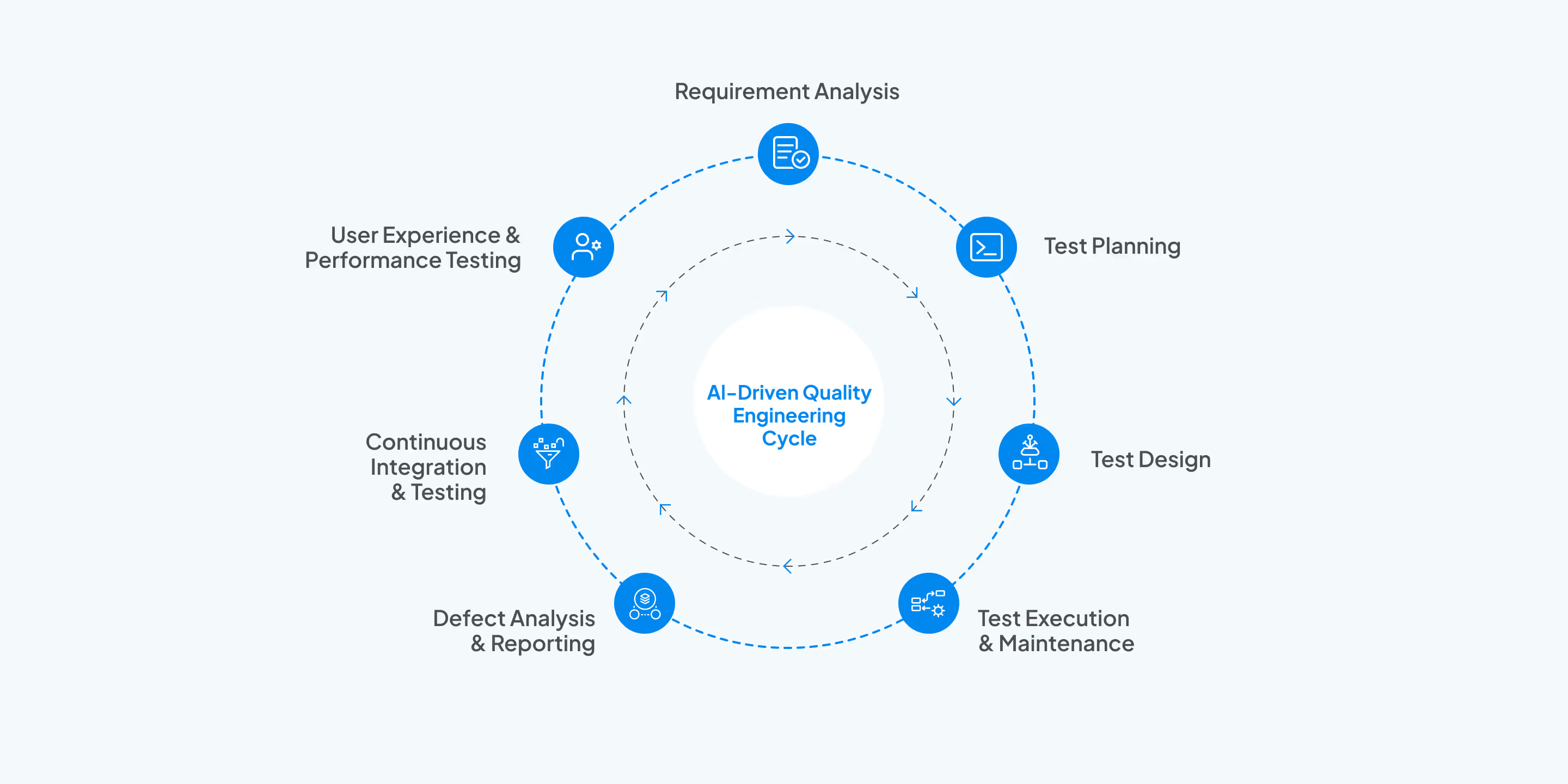
AI-Driven Quality Engineering Cycle for enterprise-grade quality assurance
.avif)
AI-Driven Quality Engineering Cycle for enterprise-grade quality assurance
Recently asked questions
What kind of results do teams usually see from Quality Engineering?

How do you decide what to test and automate first?
How do you fit into our existing delivery process?
What does good test coverage actually mean?
How do you test content-heavy platforms?
How do we know Quality Engineering is making a real difference?


