AI-powered legal search helps 62% more users find legal help
.png)

Focus
Search Experience, AI Infrastructure, Legal Aid Tech
Services
Web Development
Experience Design
Web Infrastructure
AI Solutions
Illinois Legal Aid Online (ILAO) provides legal information tailored to the needs of Illinois residents, many of whom face barriers related to cost, language, or general access to legal help.
QED42 has been ILAO's technology partner for over nine years, beginning with experience design and web development, then progressing to solutions for web infrastructure, content structure, and search accuracy. Most recently, we developed two AI-powered solutions, with more underway, to make legal information easier to understand and access.
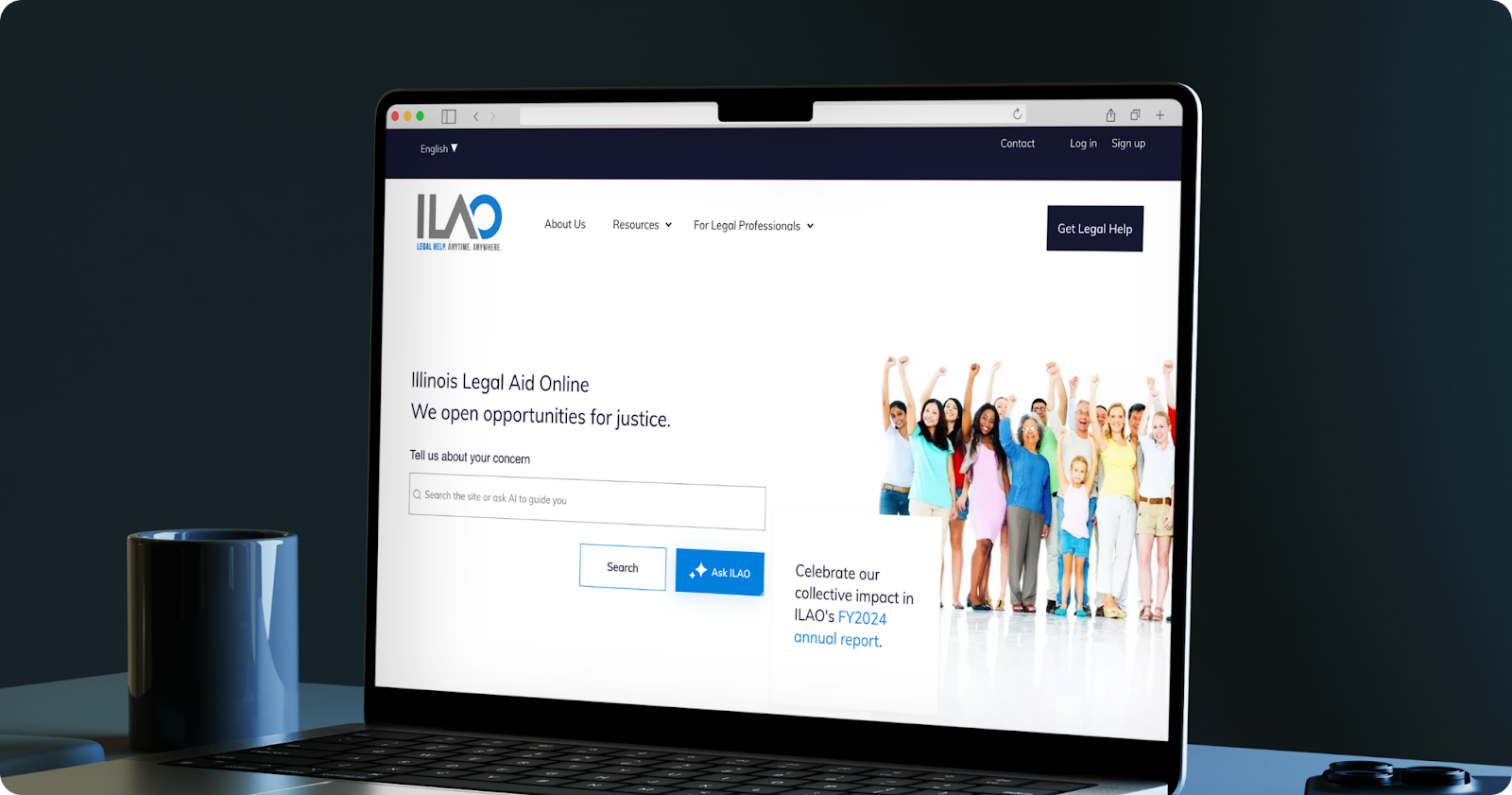
Semantic search replaces ILAO's keyword-based system. It interprets user intent and ranks results by legal relevance, making it easier for users to find information without prior knowledge of the law. The system supports both English and Spanish users.
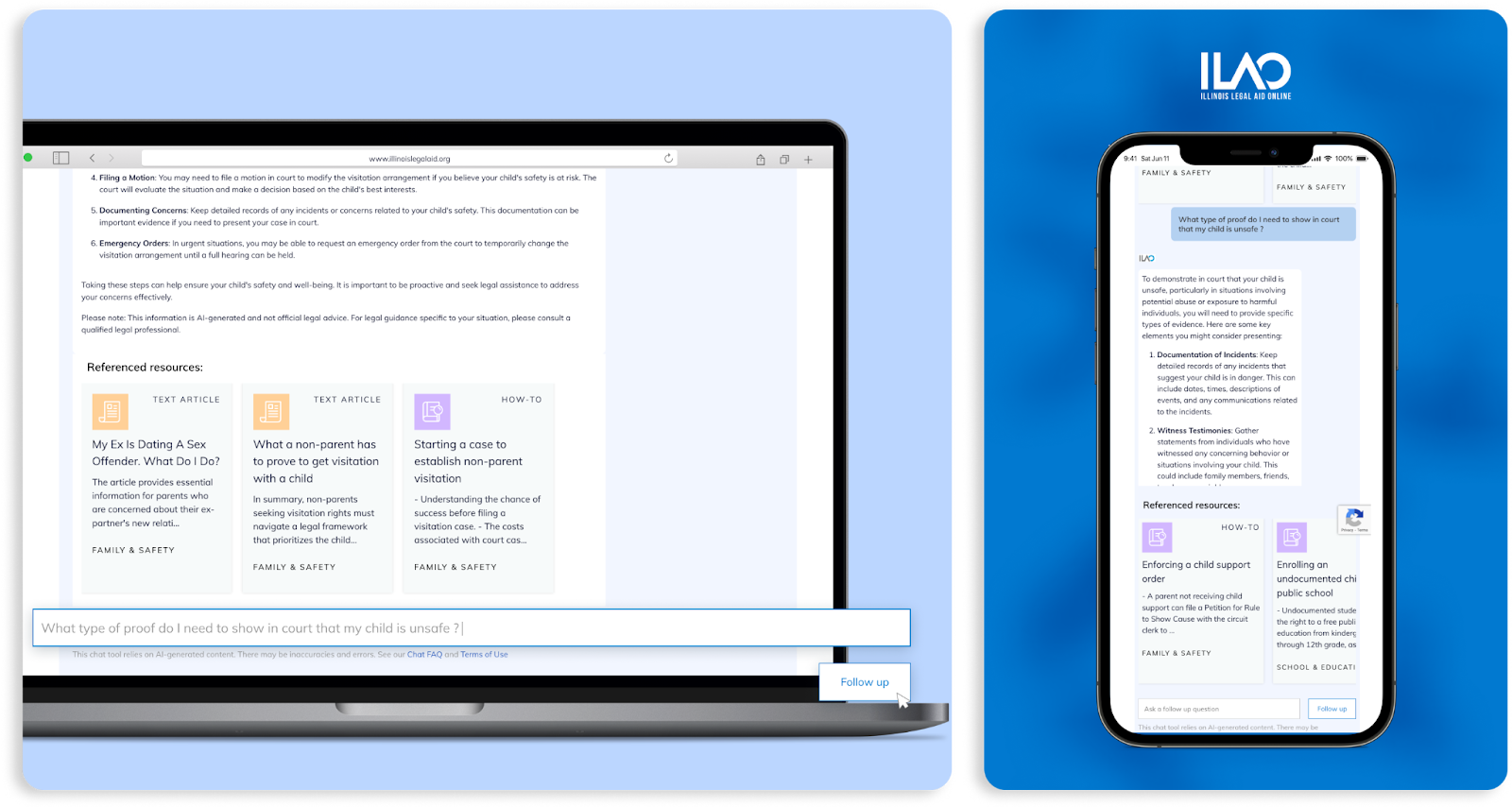
A conversational AI assistant provides structured, plain-language responses through a chat interface. Built on a retrieval-augmented generation (RAG) architecture, it draws exclusively from ILAO's verified legal content to ensure responses reflect current Illinois law.
Both tools provide general legal information to Illinois residents. The work resulted in more users being served and a shift in how they interact with legal information: more guided, consistent, and aligned with how people naturally ask for help.




Challenges
Improving access to legal help online presents unique barriers for organizations serving people unfamiliar with legal systems.
Users know what problem they're facing (an eviction notice, unpaid wages, a custody dispute), but not the legal terms or categories that would help them search effectively. Keyword-based search failed them because it required the very vocabulary they lacked.
ILAO previously offered live chat services, but the costs weren't sustainable. Duplicate and misclassified content also made it harder for users to find reliable, actionable information.
Accuracy posed a separate challenge. Off-the-shelf AI models lacked legal specialization and risked generating responses not grounded in current Illinois law or verified sources.
Approach
We began by observing how people searched for legal help and where they struggled. This informed our decision to choose a retrieval-based approach anchored in ILAO's verified legal content, allowing responses to remain reliable, traceable, and easier to improve based on user feedback.
Design and engineering moved in parallel. User behavior shaped the conversational interface. Search refinement focused on reducing friction for users unfamiliar with legal terminology.
Our goal was to ensure every response reflects current Illinois law and links back to articles reviewed and approved by ILAO's legal team.
Solutions
Semantic search
A semantic search engine replaced ILAO's keyword-based system. Instead of matching keywords, it interprets what users mean and returns results based on legal relevance. Users can describe their situation in plain language (e.g., "my landlord won't return my deposit") without knowing the correct legal term. The system draws only from ILAO's reviewed legal content and supports both English and Spanish.
Conversational assistant
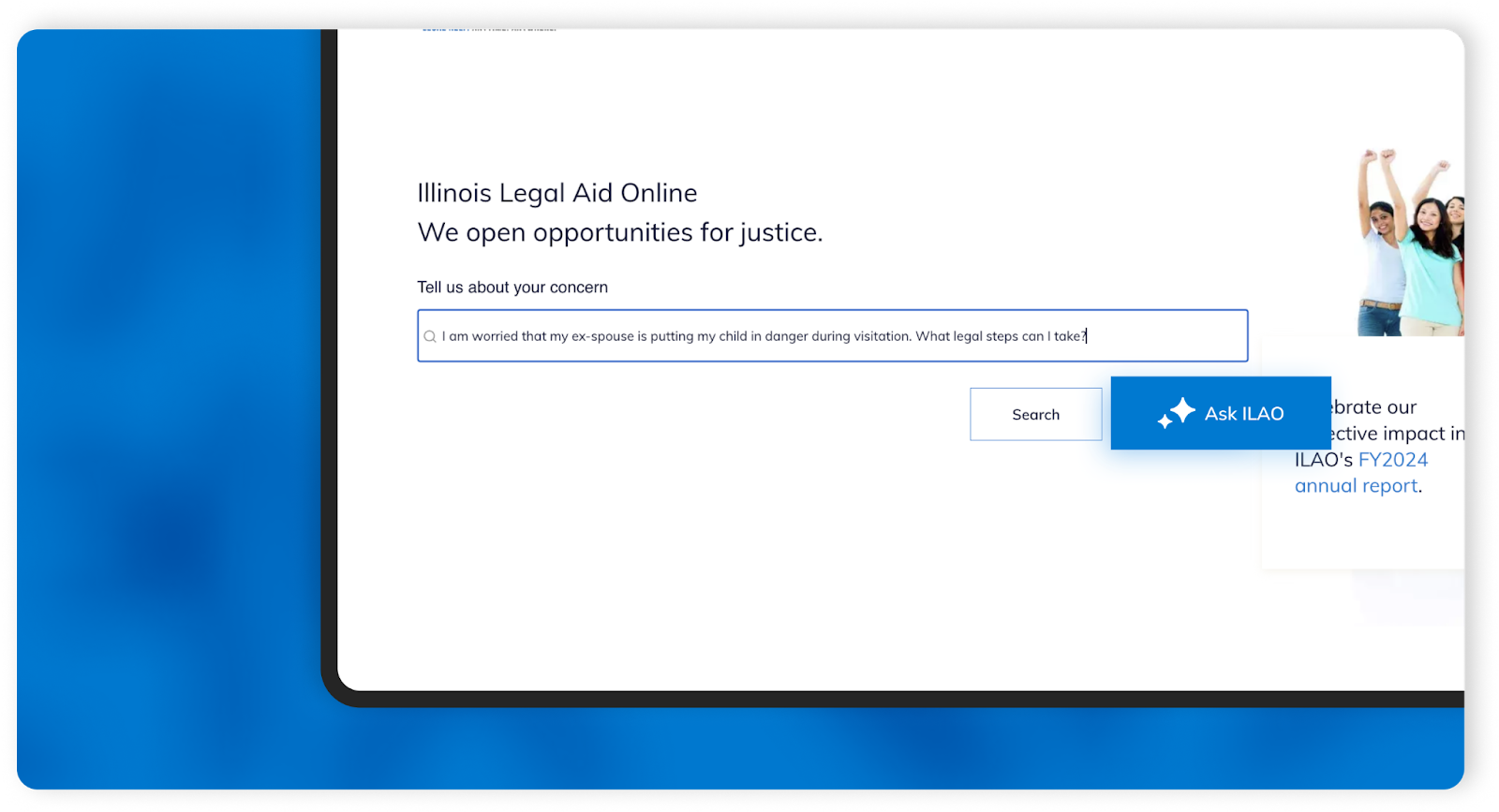
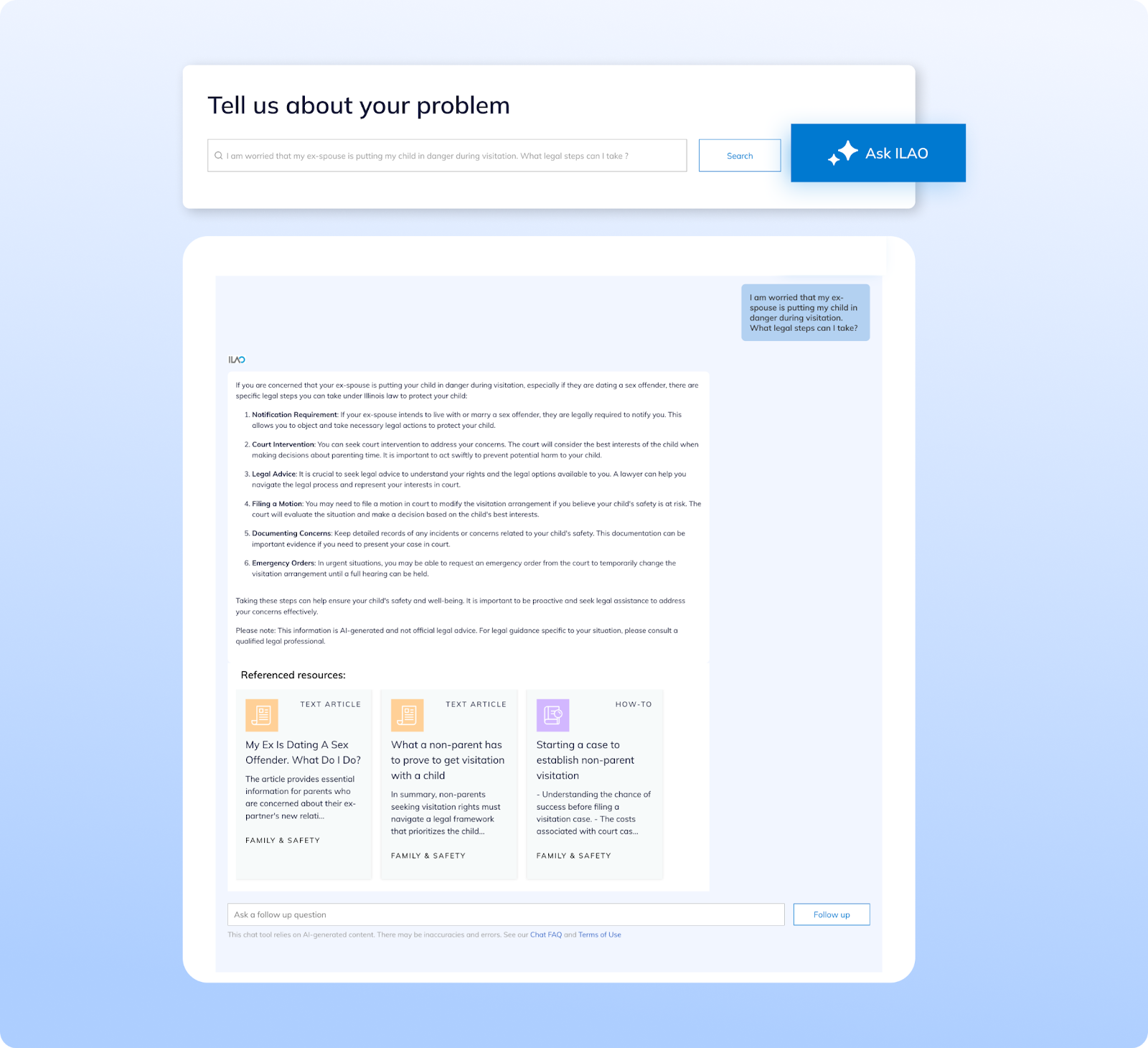
A conversational assistant provides plain-language responses through a chat interface. Users ask questions and receive structured answers without navigating multiple pages.
The assistant uses a retrieval-augmented generation (RAG) architecture: it retrieves relevant content from ILAO's legal articles, then generates a response grounded in that material. This ensures responses are traceable to verified sources rather than generated from the model's general training data.
Backend and infrastructure
The AI systems required infrastructure that could process ILAO's legal content and serve it reliably to both the semantic search and conversational assistant.
A data ingestion pipeline prepares ILAO's legal articles for retrieval. Content is processed and structured to improve the quality of search results and assistant responses. The pipeline updates as ILAO's legal team publishes new or revised content.
Vector storage holds the processed content and enables fast, relevance-based retrieval. The configuration was sized for ILAO's content library and query volume.
The system exposes API endpoints that integrate with ILAO's existing Drupal site. This architecture keeps the AI layer separate from the CMS, making it easier to maintain, update, and scale independently.
Outcome
Users knew their problem, but not the legal vocabulary to search for it. The keyword search failed them. Live chat was too costly to sustain. Semantic search and the conversational assistant changed how Illinois residents find legal help.
More users served
Comparing February 1 to December 31 in both years, active users of the search experience grew by 62%, from 29,924 (2024) to 48,463 (2025). Search page views increased by 61%, from 85,505 to 137,527.
Deeper engagement
Average engagement time per user rose by 35%, from 1 minute 14 seconds to 1 minute 40 seconds. Users are spending more time with the content they find.
More meaningful actions
Session key event rate more than doubled, from 4.44% to 10.15%. Users are not just viewing pages but completing actions like accessing legal articles, using tools, or following referral pathways.
Multilingual access
The Spanish-language interface (/es/semantic-search) recorded higher engagement time per session than English, showing the system serves Illinois' multilingual communities.
The AI SmartSearch project enhanced accessibility and effectiveness by enabling users to ask legal questions in natural language and receive contextually relevant responses.
Michael Rush
Director of Product Development

Bring us your challenge
We’ll help you get clear on what needs solving,
that’s where we begin




.webp)
.webp)


.webp)
.png)
.webp)

.avif)

.avif)
.avif)
.avif)


.avif)


.avif)
.avif)


.png)