All blogs

Building an AI DXP: mapping thoughtful user journeys
Designing an AI Digital Experience Platform (AI DXP) starts with understanding how people engage with technology in their everyday workflows. It requires clear, functional solutions that integrate AI without complicating the experience.
This blog shares the journey of creating a sector-agnostic AI DXP focused on delivering intuitive, AI-powered solutions. At its core, the platform emphasizes user-centric design—making sure it works seamlessly across industries while adapting to specific needs.
The process was all about answering practical questions — How can AI simplify tasks without taking control away from users? What design choices make the platform feel approachable and effective?
The goal was to create something that feels natural to use while making the most of the tech to improve productivity and decision-making. By focusing on user journeys, we ensured the platform prioritizes usability, making the technology work for people in a way that’s simple, practical, and meaningful.
Building the foundation
To lay the groundwork, we organized a couple of workshops involving stakeholders, project managers, engineers, and business leaders. These sessions helped align user priorities and product objectives, ensuring the platform addressed meaningful challenges effectively.
The design team started by identifying three key use cases and mapping user journeys to establish the foundation of the Minimum Viable Product (MVP). Tasks were approached collaboratively, with regular discussions to integrate ideas. Daily task-level meetings and weekly strategy sessions kept the development dynamic and adaptable, ensuring the platform evolved in line with user and business goals.
This collaborative process made sure that every aspect of the platform was built to serve real-world needs while remaining flexible for future iterations.

A snapshot of the AI DXP Workshop framework, showcasing a collaborative approach to defining project goals, ideating solutions, and prioritizing tasks.
Mapping the user journey — a step-by-step approach

Cross-Functional team collaboration on user journey mapping, This visual captures the detailed user journey map, broken into key stages: Onboarding, Integration, Configuring, Stimulation/Testing, and Analysis. Each column outlines user steps, actions, goals, experiences, feelings, pain points, and opportunities
We identified five key steps that define the user journey for AI DXP.
1. Onboarding
Users begin by creating an account and exploring the platform’s features. This phase includes interactive tutorials and resources that guide users through uploading and integrating their data. By the end of onboarding, users gain a clear understanding of the platform’s capabilities.
2. Integration
Users connect their existing databases, CMS, or external systems to the platform. This step enables the AI to process datasets, providing the foundation for delivering relevant results and actionable insights. Compatibility with popular platforms and APIs ensures smooth integration.
3. Configuration
This phase involves tailoring the platform to specific business needs. Users select the AI features they want to activate, Customised search parameters & some user experience tweaks. These adjustments ensure the AI aligns with their goals.
4. Testing
Users conduct tests to see how the system performs in real scenarios. This includes running sample queries, analyzing how results are displayed, and fine-tuning configurations to improve precision and usability before full deployment.
5. Analysis and Reporting
Dashboards provide insights into key metrics such as search accuracy, user engagement, and content performance. Users can review analytics like common queries, areas of high engagement, and system-generated suggestions. These reports help track performance and highlight areas for optimization.
Each step was mapped to specific user interactions, emotions, potential friction points, and opportunities for improvement. This granular approach ensured the platform delivered a streamlined experience while addressing real challenges users face in managing and interpreting their data.
User flow and workflows
Based on the user journey, we identified three essential workflows to focus on for the Minimum Viable Product (MVP).

Prioritized user flow defined after team alignment for MVP, A user flow diagram illustrating the step-by-step journey users take through the product. This visual maps out interactions, decisions, and transitions, providing clarity on pathways and potential bottlenecks.
Onboarding
Getting users started and comfortable with the platform.
Onboarding was all about making the first steps clear and approachable. We worked on simplifying account setup and guiding users through their initial interactions with the platform. A lot of attention went into answering questions like:
- How can users see the platform’s potential right away?
- What’s the simplest way to help them get started?
- How do we make this first step feel smooth and purposeful?
The result was an onboarding experience that was straightforward and practical, helping users feel confident as they began exploring the platform.
Configuration
Letting users set up the platform to match their needs.
This workflow focused on creating a simple, clear process for users to adjust the platform’s settings and features based on their goals. Whether it involved customizing preferences or adjusting workflows, the emphasis was on ensuring flexibility without overwhelming complexity.
Testing
Helping users fine-tune the platform with hands-on feedback.
Testing allowed users to explore how the platform worked in their context. Through small iterations and adjustments, they could refine its functionality to fit their specific needs. By testing features in real time, users were able to see what worked and adjust anything that didn’t.
These workflows formed the foundation of the MVP, ensuring the platform was functional, easy to adopt, and adaptable to different use cases without over-complicating the experience.
Building the core
At the centre of this product is an AI-powered content management system (CMS) designed to simplify workflows and automate complex processes. AI capabilities were integrated to handle tasks like dynamic content generation, data management, and personalized content delivery, reducing the need for manual intervention.
The platform includes AI-driven features for content tagging, automatic metadata generation, and contextual suggestions to improve usability and save time. These tools enable the CMS to adapt to user behaviors, making it intuitive and practical for day-to-day operations.
The focus remained on ensuring the system delivers value to users by automating repetitive tasks and enabling smoother interactions with content and the workflows they want to set up.
Guiding principles for good UX
When designing the platform, we focused on two key principles to make the experience intuitive and effective.
1.User control
We wanted users to feel confident and in charge of how they use the platform. Whether it’s deciding when to activate AI integrations or how they fit into their workflows, the goal was to give them clear control without unnecessary complexity.
2.Error prevention and iteration
We built the platform to allow users to test things as they go. They can tweak configurations, see immediate results, and make adjustments in real-time. This process helps them refine how AI fits into their needs without worrying about getting things perfect the first time.
These principles guided every design decision, ensuring the platform feels approachable and adaptable. By keeping users at the center, we created something that works across different industries while still feeling personal and practical.
Lessons learned
Designing AI products is a constant exercise in balancing complexity, uncertainty and simplicity. There’s always a tension between pushing the limits of what technology can do and making sure it still feels approachable for the people using it. Along the way, we learned that the best solutions come from listening—whether it’s through workshops, team collaboration, or iterating based on feedback.
One of the biggest takeaways was the importance of focusing on what truly matters: flexibility, reducing friction, and giving users the control they need to trust the platform. It wasn’t about cramming in features but about creating something that fits naturally into their workflows and makes their lives easier.
Looking ahead, these lessons will guide how we approach every new challenge. Whether we’re rethinking a small detail or introducing entirely new features, the goal will always be the same: to build AI products that feel intuitive, adapt to real-world needs, and make a tangible difference for the people using them. This journey with AI DXP has set the tone, and we’re excited to see where it takes us next.

DXP: Transforming Academic Experience Through Personalization
Students' expectations from university, especially regarding online interactions and courses, have increased significantly. They expect and demand education that reflects their preferred learning styles, interests, and continued relevance to the professions they wish to pursue.
They want the same modern, fluid, seamless, and personalized experiences on campus, in university offices, and with their professors.
Research shows that 94% of students believe connecting with faculty, and other students, receiving course suggestions, and getting notifications about deadlines based on academic performance and interest would help them feel more connected to their institutions.
With many students now attending college classes remotely, potential students are rating digital interactions at the beginning of their college search as the run-through for the learning experience.
Hybrid and online learning has become the new norm. A sharp drop in the digital experience quality after a student enrolls could affect an institution's reputation and, ultimately, a student's experience.
To succeed in this new landscape, colleges and universities must rise to the occasion and provide a high-quality digital experience for all students, both remotely and on campus. In this blog, we'll explore how a Digital Experience Platform (DXP) provides educational institutions with access to information and applications while offering a new level of personalization to understand better the needs of their students, alumni, staff, and community members.
Understanding personalized university journeys

Students are looking for a meaningful digital experience that is more personal and relevant, so any differentiator, especially when it comes to personalizing content, can make a huge difference.
University and college websites and apps fail to create a more personalized user experience. Around 58% of students reported that of all the brands they engage with, their institution is furthest behind in personalizing their experience.
Universities need a way to syndicate content across all channels and understand user preferences to better engage with their students.
To understand personalized journeys, we need to look at what end users expect:
- Personalized support and information
- Easy access to information
- They want to avoid too many frustrating barriers
For higher education institutions to achieve this, they must understand their users, create relevant and exciting content, and personalize it. This process should then be automated.
DXP: Solving higher education’s personalization problems
DXP unifies the siloed systems for managing websites, landing pages, analytics, email campaigns, and CRM-powered content.
DXP enables personalization by defining audience segments with robust rules for fine-grained personalization and engaging these segments with a wide range of personalized experiences across pages, navigation, and assets.
This allows for a much more customized and individualized user experience tailored to each student’s needs and interests.
DXP provides a differentiated digital experience and offers personalization
Meeting student needs
Each student gets their profile, populated with data from all channels and devices, that helps them to get personalized experiences in real time!
Further, a DXP can
• Segment audiences based on user behavior, location, and role
• Deliver personalized content and web pages to specific segments
• Aggregate student data across silos
Meeting marketing and communication needs
Engaging users with relevant and targeted content can increase conversions
DXPs provide personalized user experiences and actionable content based on analytics-driven insights. With this, users can access all decision-aiding tools, predictive recommendations, and relationship-enhancing features.
Universities can leverage built-in analytics to track customer engagement metrics, calculate ROI, and leverage A/B testing, web analytics, and social analytics to continuously test the effectiveness of the experience. The insights are drawn from metrics to improve user experience and to make informed decisions
Meeting teachers and staff needs
It offers a connected digital tool to deliver personalized news feeds to improve overall productivity and encourage collaboration through blogs, forums, and knowledge management.
DXP can personalize experiences based on different roles and permissions. For example, a user with the administrator role can have a different experience than a user with the role of teacher.
Bringing collaboration
Teacher, partner, and team member collaboration is essential for fostering engagement. Collaboration enables organizations to innovate, collect data, and provide better customer service in the education sector.
Converting a visitor into a brand advocate
Through personalized content and seamless omnichannel access, DXPs could develop deep engagements with customers. DXPs can convert a short-term transaction-based customer interaction to a long-term strategic relationship through user engagement features.
Predictive insights
Omnichannel analytics-driven insights can be leveraged to offer personalized recommendations. Based on trend analysis, business stakeholders can predict future trends, such as seasonal traffic spikes, holiday traffic size, etc., and be prepared to handle the scenarios.
DXP: Providing unified solutions for universities
Stanford Graduate School of Business
QED42 has redesigned GSB’s web and mobile experiences with an intuitive UI. Delivering a flawless experience for course selections and information access and elevated their mobile experiences.


Results:
- Enriched digital experiences for GSB's aspiring and current students, lifelong learners, alums, and staff
- Elevated and simplified the course selection experiences for students with modernized platforms
- Redefined their mobile experiences for students and faculty with a revamped information architecture
- Powered GSB's non-technical staff to create, launch, & manage pages and content independently
University of London
The University of London adopted a DXP to enhance its student portal with a responsive design and engaging experiences for its students.

Results:
- Improved student experience for over 170,000 students across the globe
- Empowered business users to manage experiences independent of IT
- Increased student engagement by offering a consistent experience across multiple touchpoints
Griffith University
Griffith University designed a personalized experience using DXP to engage new students with a digitalized orientation process.

Results:
The MyOrientation app.
- Guides students through the various activities they must complete before arriving on campus
- Able to track all students' orientation progress
- Administrators are able to send tailored communications to provide the necessary support
- Tailor a personalized experience quickly based on what it already knew about students
- The plug-in components enabled the university to provide automated first-day planners, drawing information from students’ existing attributes
Capella University
Capella University is a leading online university that needed a new platform to integrate all of its technologies for a unified, personalized, intuitive user experience. They built a tool using DXP to support their student's academic growth.

Results:
- Displays real-time academic activity for each student through personalized course dashboards
- Students were able to customize their Degree Completion Plan
- Integrates LMS, student resources, and grades on one platform
DXP: Achieving digital excellence at universities
The digital landscape is constantly changing, and educational institutions must keep up with the pace of change to remain competitive.
Students are looking for more value, innovation, and interconnected digital experiences from higher education institutions.
Leverage DXPs to achieve digital excellence and drive deeper engagement with your students, faculty, alumni, and prospective students.
.avif "The DXP Playbook: Overcoming Marketing Challenges")
The DXP Playbook: Overcoming Marketing Challenges
Just as businesses have changed the way they operate and succeed in the post-pandemic world, marketing has had a paradigm shift to adapt to the new normal. The demand to create personalized customer experiences across multiple digital channels has completely transformed how organizations engage with modern customers.
The biggest challenge in marketing lies in the speed of go-to-market. As customers expect real-time connection and fresh content with brands, marketers feel the need for speed. Complete dependency on the IT team for content authoring and management delays go-to-market. The traditional CMS (Content Management System) cannot meet today’s omnichannel content delivery needs.
As technologies and customers’ expectations have evolved, marketing strategy needs to evolve by streamlining the ever-expansive Martech stack. Your marketing should align with the new level of customer engagement and personalization to increase conversions and reap the benefits of digital marketing. While technology alone cannot solve marketing issues, the right combination of digital tools will help you. reach your full marketing potential in the digital age.
Reach your full marketing potential with a DXP
A Digital Experience Platform (DXP) provides not only a set of the right tools but also a way to connect them all together. You can combine all these future-proof tools into one unit to perfect personalized digital experiences for your customers.
DXPs divide functionalities and architecture into packaged capabilities that are composable and flexible. Each of these capabilities includes a set of functionalities that helps you fulfill a specific purpose.
With the right capabilities and functionalities, you can use a DXP to transform your entire CX into one cohesive flow. It will equip your marketing team to deliver content personalized to your audience across all channels, from websites to mobile apps and IoT apps.
Why consider a DXP in your marketing strategy
Most businesses use different tools for marketing, such as CMS, CRM, marketing automation, analytics, and more. But these varied tools form a disconnected suite that is difficult to integrate and results in data silos. Most teams don’t even use all the tools within a suite efficiently.
On the other hand, a DXP contains all tools required for a MarTech stack but with seamless integration to each tool, and to existing software. A DXP gives clear visibility of every customer interaction with your business to efficiently manage end-to-end customer journeys across all touchpoints. Consider various DXP capabilities that will fuel your marketing strategies.
Deliver winning brand experiences with DXPs

As content plays a significant part in building brand experiences, a DXP will provide the capabilities you require to create and deliver digital content and experiences. Explore DXP capabilities that will fuel your marketing strategy.
Hybrid CMS
A hybrid CMS is a platform combining the capabilities of a traditional CMS and a headless CMS. The combination allows for more flexibility where you can enjoy the user-friendly interface of a traditional CMS with the architectural flexibility of a headless CMS for greater control over your front end.
Content Delivery Network
A CDN comprises servers that distribute cache data globally from the origin server. CDNs enable you to deliver updated content with quality, speed, and performance as your site users can quickly access content from a server near them.
WYSIWYG Editor
The WYSIWYG (What You See Is What You Get) editor enables you to edit content (text, links, graphics) in the way it would appear on the front end. The editor gives you more creative control to create content and focus on the final design that matches the rest of your digital content.
Content-as-a-Service (CaaS)
CaaS is a layer of APIs, REST, and GraphQL that enables you to access functionality and content separately from the backend. You can create and deliver on-demand content using all content types, such as dates, media, location, and text.
Multisite Platform
Multisite is a feature of CMS where you can build, manage, and operate multiple sites from a single platform. You can easily build and launch new sites with the same codebase, components, and design language on the same server to manage them all with a single dashboard.
Multilingual & Localization
You can create and publish content in multiple languages to cater to all your customers across different geographies. This feature also allows you to edit and personalize content for each geography based on the customer and market needs.
Content Workflow
You can improve your content creation with multistep automated workflows that help you coordinate between multiple customer touchpoints along the buyer’s journey lifecycle. Marketing automation boosts conversions and revenue.
Digital Asset Management (DAM)
DAM helps you store and retrieve digital content and assets quickly without the need for an external database. You can organize your content in a centralized location, making it accessible to all team members and aligning the workflows together.
Low Code/No-Code Capabilities
Low code or no code is a process that facilitates software development with components that require minimal or no coding. Your marketing teams can drag-and-drop these components to build content pages without depending entirely on development teams.
Solving modern marketing challenges with a DXP

Omnichannel Delivery
A DXP generates a 360° view of your customers at every step of the buying journey. It's much easier for your marketing teams to optimize and launch pages and campaigns across multiple channels to maintain an interactive and responsive presence.
Personalization
DXPs integrate Business Intelligence (BI) and advanced analytics microservices that will enable your marketing teams to personalize content for each customer tailored to their preferred touchpoint. You can deliver the right content at the right time to foster customer loyalty.
Better Control
As DXPs integrate with your business commerce, customer support, and marketing platforms, they help you acquire better control over how you engage and interact with your customers. You can collect data from different sources and use insights to deliver relevant content to your customers.
Flexible Architecture
DXPs are agile and flexible enabling marketers and developers to make necessary independent changes and updates to sites without delay or latency. DXP microservices are independently deployable giving your marketing team the flexibility of publishing content in real-time.
Faster Time-to-Market
DXPs enable effective collaboration between marketing teams and IT teams. Your marketing team can create landing pages and manage content updates on their own without requiring IT assistance for these tasks.
Brand Building
DXPs have an agile CMS that will help you to build your brand with consistency. You can easily store and access your digital assets, such as images, videos, graphics, and templates to take your brand story into the future.
Ideal MarTech Stack
DXPs give you the flexibility to choose an integration framework and architecture to build an ideal digital experience stack. You can choose the tools and integration that can meet your business’s unique needs, for now, and in the future.
Implementing an effective DXP
Implementing an effective DXP will empower your marketing teams to deliver an elevated digital experience that drives customer engagement and revenue. The integration capabilities of a composable DXP improve workflows and collaboration to deliver contextual content at scale. However, you need to assemble the right DXP that works for your business. Consider the factors you need to focus on to put the best DXP together.
Data Analytics: Data insights help to understand customer history and expectations to personalize content. Integrate an analytics engine and marketing automation to get a complete insight into your customers on an individual level.
CMS with Orchestration: Invest in a CMS with orchestration to enable reusability across multiple channels. Create content once and publish it everywhere driving omnichannel content delivery.
Marketing Automation: Automation capabilities enable your marketing teams to focus on creating the right content instead of lead generations and bulk emails. Marketing automation takes care of repetitive tasks allowing you to work on enhancing experiences and driving revenue.
Marketing experience optimization with a DXP
An Open DXP empowers you to optimize your marketing experience by serving a myriad of customers with unique needs, interests, and expectations. You can not only create content targeting customer needs but also enhance experiences by acting upon the interactions and feedback.
A DXP will be a one-stop platform for your business to create, manage, and deliver personalized content. You can collect data to measure the impact of your experiences and rapidly iterate through improvements with a DXP.
A DXP will help create and drive a robust, futuristic digital strategy for your business, and manage your digital content and assets at scale.

The ROI of Digital Experience Platforms (DXP)
Customer Experience (CX), the backbone of every business matters more in a digital business than in a traditional business. Since by definition “digital” is remote and inhuman, a human touch is required which is a challenge in a digital business.
Forrester reports that prioritizing CX helps 66% of businesses see increased retention, and 60% of businesses see increased customer lifetime value. Hence, CX or Digital Experience (DX) makes all the difference between a business that succeeds and one that doesn’t.
Evolving technologies have enabled businesses to enhance CX and deliver it via multiple touchpoints. In the ever-augmenting MarTech suite, Digital Experience Platforms (DXPs) play a central and significant role. A recent CX survey by Emplifi states that brand CX and speed of delivery/availability are the top two criteria of modern customers.
A DXP empowers businesses to achieve those criteria. DXPs combine personalization, integration, content management, navigation, collaboration, analytics, workflow, and omnichannel support capabilities to deliver enhanced digital experiences effortlessly.
Let’s consider some game-changing benefits of DXPs.
Transformative advantages of DXPs
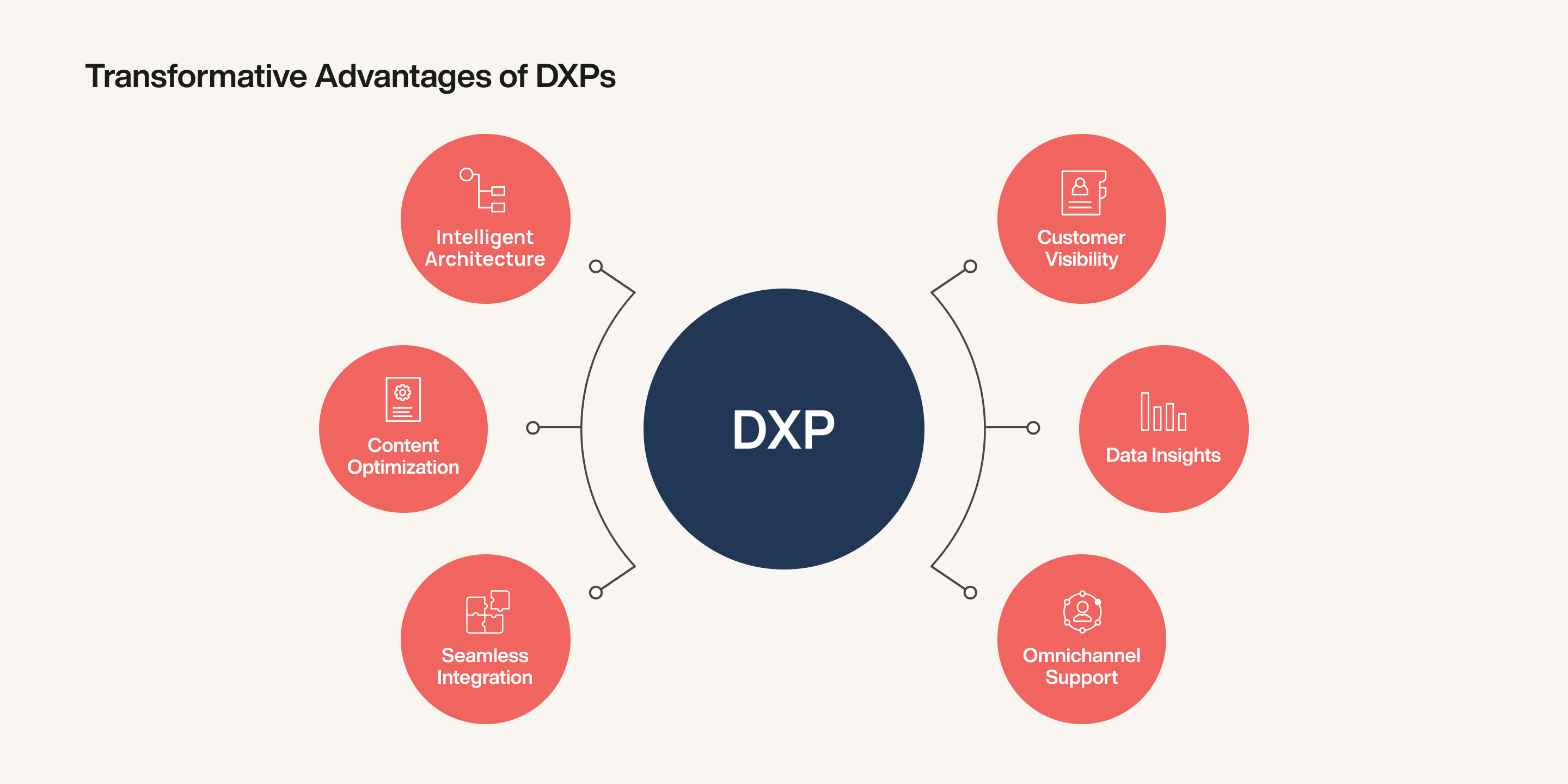
Intelligent architecture
An Open DXP utilizes microservices and Application Program Interfaces (APIs) to connect with internal and external systems. Businesses can easily make changes in the front-end and back-end simultaneously, improving administrative efficiency and enabling continuous app development.
Content optimization
Modern hybrid DXPs use Headless CMS with advanced AI and ML capabilities to optimize and deliver content across multiple channels. Businesses can create personalized content for each channel and track what works for whom to optimize content further.
Seamless integration
Pre-built APIs of a modern DXP connect with all existing systems, platforms, and third-party databases for seamless integration. Businesses can connect and manage all their apps, channels, and services on one platform.
Customer visibility
As DXPs integrate with other software and platforms in the ecosystem, they enable a 360-degree view of each customer. Businesses can easily access all information about a customer, their buying history, preferences, and behavior on a single dashboard.
Data insights
DXPs combine advanced analytics, customer data, and content management to generate actionable and predictive insights. Businesses can work on these insights to deliver personalized recommendations and experiences.
Omnichannel support
DXPs enable businesses to deliver personalized digital experiences and content over the web, mobile, eCommerce, voice, social, portals, and chatbots. Brands can custom-create experiences for each customer via their preferred device at any time.
DXP ROI - Factors that contribute
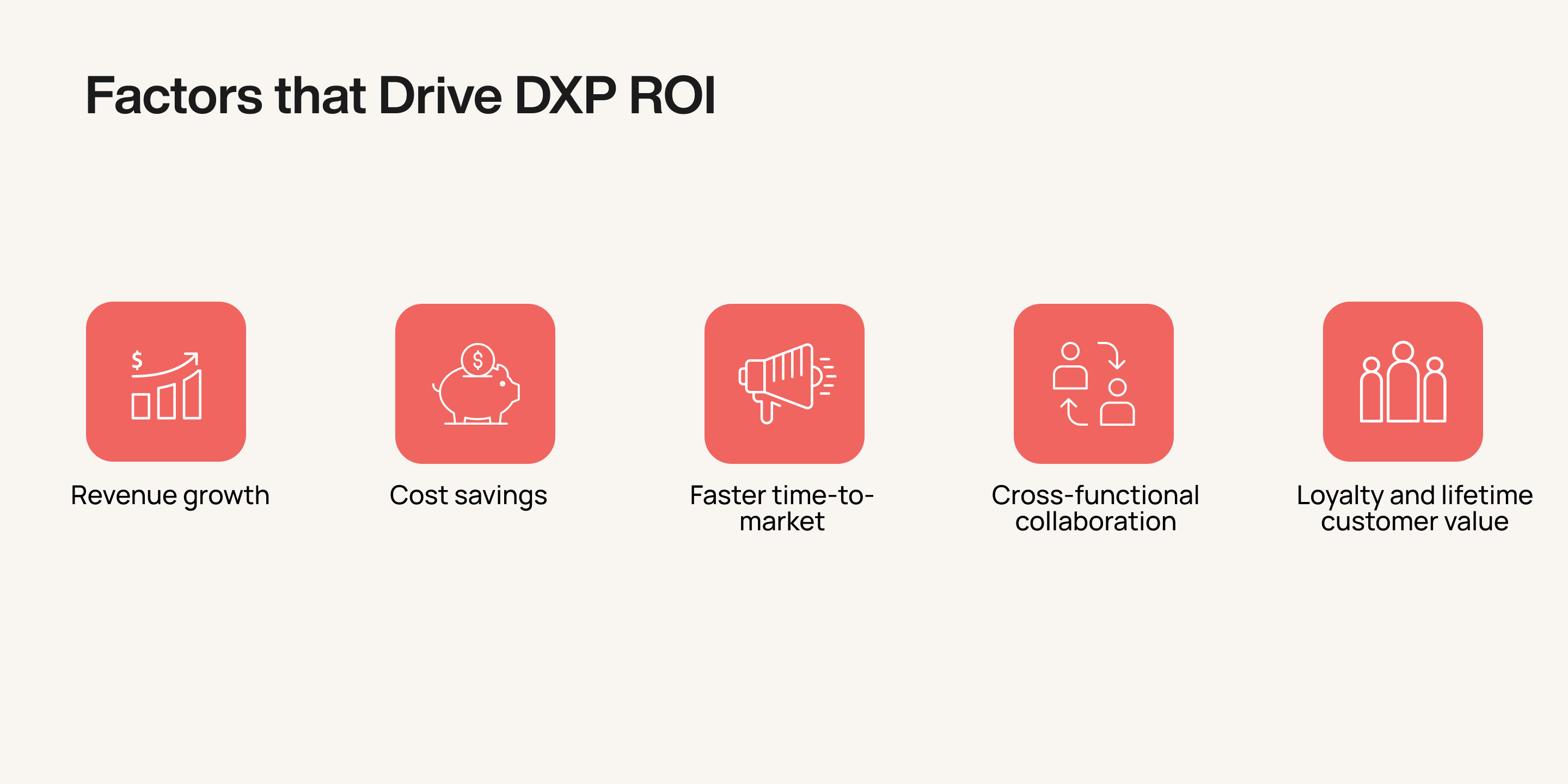
The exact Return on Investment (ROI) for DXP will vary for each business based on several factors, such as business requirements, investments, integration, implementation, and progress. But in general, when businesses adopt a DXP, they can expect quantitative benefits in five major areas.
Revenue growth
Businesses see an increase in revenue when they deliver personalized digital experiences via a DXP.
Forbes states that businesses that offer enhanced and personalized CX outperform their competitors by 80%. According to a Deloitte survey, consumer spending increases up to 140% with a positive experience. Also, 80% of customers are more likely to purchase when offered or recommended personalized experiences.
Cost savings
DXPs help businesses to reduce operational costs by automating processes and workflows.
Businesses can access and manage core business components on one platform via a DXP. They can reduce misplaced assets, remove MarTech redundancies, and efficiently incorporate changes and advanced capabilities that reduce development and integration costs. Deloitte reports that enhanced CX lowers business costs by 33%.
Faster time-to-market
DXPs accelerate time-to-market by distributing content seamlessly across multiple channels and streamlining business processes.
PwC states that 80% of customers expect speed, convenience, and knowledge from businesses. A DXP empowers businesses to deliver personalized content, products, and services at the right time via the right channel for each customer.
Cross-functional collaboration
DXPs enable cross-functional collaboration across an entire business to accelerate innovation and digital transformation.
Accenture reports that companies prioritizing cross-functional collaboration with digital platforms saw a 4X increase in revenue gains. DXP enables businesses to reduce siloed solutions and drive IT-OT (Information and Operating Technology) collaboration with ML-driven insights, KPIs, and intuitive dashboards.
Loyalty and lifetime customer value
Businesses that deliver personalized experiences via a DXP transform average customers and prospects into loyal brand ambassadors.
Forbes states that 74% of customers are likely to become long-term customers or return to a brand for purchasing based on excellent CX. Gartner reports that 66% of customer loyalty comes from outstanding CX.
DXPs - Vital for current and future growth
Businesses that do not deliver personalized CX cannot remain competitive in the digital business landscape. Though some companies have adopted a CMS, it is not an adequate digital tool in this dynamic environment. As technologies and customer expectations evolve, a DXP is an ideal tool to deliver enhanced CX.
Businesses that may not require a DXP right now would definitely need it sometime sooner than expected. DXPs accelerate the pace of digital transformation in organizations by giving complete control over its implementation. Businesses can adopt a methodical approach via a DXP to shift to agile workflows, upgrade the MarTech stack, connect silos, and evaluate customer data.
Businesses can future-proof themselves with an Open DXP as the platform evolves and integrates with advancing technology. It becomes convenient and effortless to upgrade tools via a DXP to adapt to the ever-changing demands of the target audience. A DXP is essential for the current and future growth of any business across any industry.
DXPs - To lead in the CX Era
In the CX era, only businesses that adopt a DXP to deliver personalized digital experiences will lead the way and thrive in the competitive landscape. The advantages and ROI of DXPs make a compelling foundation to adopt one and reap quantitative benefits.
If you are looking to deliver personalization across all digital touchpoints and curate an optimized customer journey for your business, a composable DXP is the ideal solution.

All about Building an Open DXP with Headless Drupal
Scalability is the key when determining which digital properties work best for your business. It helps you keep pace with the rapidly changing landscape of digital experiences. In today's digital landscape, it is essential to deliver the right experience via the right touchpoints at the right time. Here’s where DXPs play an essential role.
A Digital Experience Platform (DXP) is the platform that powers the unique capabilities of a digital experience. The platform enables businesses to build, deploy, run, and scale digital products. DXPs have become the core of most modern organizations because it centrally manages all aspects of delivering digital experiences via multiple touchpoints. A DXP can be used to build portals, websites, intranets, integration platforms, and more.
DXPs come in various types:
- Monolithic DXPs
- Composable DXPs
- Hybrid DXPs
All versions aim to empower businesses to deliver exceptional Customer Experience (CX) across all digital touchpoints.
What is a Closed DXP & Open DXP?
A closed DXP is a full-stack platform consisting of all key components and is maintained by a single provider. It facilitates the supply of one vendor’s product and services. Adobe Experience Cloud is an example of a closed DXP.
An Open DXP is a composable platform that combines several components from different sources to make them function as one. The open architecture is API-first making it easy to integrate with existing and third-party systems, unlike a traditional closed DXP.
Open DXPs are backed by open-source CMS like Drupal where organizations have complete control over the direction of their digital transformation. Businesses can also upgrade tools and features wherever and whenever necessary without waiting for one provider to update the platform. Open DXPs enable low-code solutions, enterprise functionalities, and easy-to-use reusable components that empower businesses to create digital experiences as required.
The main components of a DXP

DXPs pack a lot of components and functionalities in one system for omnichannel content delivery and management. Check out some common components that make up a typical DXP. The application and inclusion of these components may differ based on the product, use case, and industry.
- Content management system (CMS)
- Customer Relationship Management (CRM)
- Customer Data Platform (CDP)
- Customer Experience Management (CEM)
- Business Intelligence (BI) Tools
- eCommerce
- Conversion Rate Optimization (CRO)
- Digital Asset Management (DAM)
- Artificial Intelligence (AI)
- Search Engines
Monolithic DXP vs. Composable DXP vs. Hybrid DXP

Monolithic DXP
A monolithic DXP is an all-in-one platform with a legacy CMS as the core to deliver and manage content. Such DXPs contain more features that a business might need. The tools that integrate with the CMS are not usually best-in-class, making monolithic DXPs cumbersome to developers and organizations.
Composable DXP
A composable DXP contains several microservices or components for integration via advanced technologies. The CMS is headless and leverages best-in-class APIs to integrate with other microservices. Businesses and developers can use a composable DXP to custom create a modular tech stack suiting their business needs.
Hybrid DXP
A hybrid DXP is one step above a composable DXP with pre-built integration services. A headless CMS is the core of a hybrid DXP which provides a user-friendly interface of a traditional CMS and the architectural flexibility of a headless CMS. Businesses can choose the technologies they want to integrate with and also get to choose from a catalog of pre-built integrations that suits their needs.
CMS - The core of DXPs
The CMS is the core of a DXP since it provides the required content for other microservices within a DXP to work together. A CMS like Drupal empowers businesses to communicate effectively with their customers by providing the right context and content. Even when a DXP offers advanced services such as omnichannel initiatives and automation, it relies on Drupal for the content.
The digital era, especially the post-pandemic market, has highlighted the increasing demand for personalized content on all digital touchpoints in a customer’s journey. This shift in digital experience has resulted in the creation of headless Drupal to keep up with customer expectations.
What is a Headless CMS?
In Drupal, the head is the presentation layer (front-end website templates, views, & pages), and the body is the back-end content repository. The traditional Drupal or Coupled Drupal enabled non-technical users to create and edit the content on the back-end and displayed that content on a pre-built front-end presentation layer.

Headless Drupal decouples or separates the back-end and front-end content management. The back-end serves as the center responsible for content creation and storage, while the front-end is responsible for content delivery via an interface.
Decoupled Drupal offers the flexibility to developers to choose the desired front-end technologies for each project and design experiences for multiple new devices and channels. Developers are not limited by the front-end possibilities offered by Drupal as decoupled Drupal empowers them to select the right tools they require. Businesses are empowered to deliver content on websites, mobile apps, IoT devices, chat portals, wearables, and CRM systems.
Is the future of content management headless?
Headless CMS (Drupal) works best for content creation and management that can be delivered to any given channel via APIs. It also allows customizing content integration with better security and improved performance. As customers continue to demand personalized content, headless Drupal enables organizations to customize content creation, management, and delivery to enhance CX.
Businesses focusing on omnichannel marketing, seamless integration, hyper-personalization, and high security would find an Open DXP with headless Drupal as the ideal solution. As DXPs evolve with advancing technologies, organizations can also future-proof their sites and create interactive experiences with new-age technologies. The future of content management would be DXPs with headless CMS as they allow companies to create solutions and experiences on multiple channels effectively.
Benefits of headless Drupal
Omnichannel content
Editors get more control over content management for consistent and seamless delivery, and content is reusable over multiple interfaces.
Enhanced front-end experience
Developers and marketers can create amazing interactions and experiences for mobiles with PWA and front-end app development.
Out-of-the-box performance
Businesses can scale front-end and back-end independently with isolated templating and development for complete control without limitations.
API-first approach
Developers can use APIs for data consumption and transfer content across multiple channels, devices, interfaces, and platforms.
Cost-effective marketing
With faster updates, rollouts, and easy-to-access and reuse marketing content, businesses can enjoy increased productivity with reduced costs.
Content future-proofing
Businesses can get the maximum value of the created content without having to recreate or revise content pieces every time technology or innovation is updated.
Headless Drupal & Open DXPs: The way forward for digital experiences!
A modern Open DXP enhances the way businesses deliver digital experiences. It empowers companies to utilize customer data, buying patterns, and evolving technologies to craft personalized experiences for each customer. DXPs enable better collaboration between internal teams, like marketing, IT, sales, operation, and management.

A headless approach is a perfect solution to deliver excellent content and digital experiences across multiple touchpoints. Headless Drupal helps businesses manage an omnichannel digital ecosystem efficiently and adapt seamlessly to changing technologies and customer demands. An Open DXP with a headless Drupal would be the ideal marketing strategy for companies to future-proof themselves.

How to Connect your Business Ecosystem with a DXP
Maxim Ivanov, Co-Founder, and CEO of Aimprosoft compares the modern digital business ecosystem to that of a biological one. He emphasizes the need for constant collaborative efforts between different business departments, starting from production to sales.
He believes a digitally-backed business ecosystem influences and is impacted by all its components, resulting in an evolving collaborative effort where every unit has to pull its weight by displaying adaptability for the business to function effectively.
This is where a Digital Experience Platform comes in.
A DXP is implemented to encourage an optimum collaborative atmosphere. According to IBM research, enterprises who have prioritized the digital transformation of their customer experience have generated thrice the revenue of those that haven’t. These companies were often termed "Experience Leaders."
According to that same report, business leaders attributed a 22% revenue growth to DXP investments. DXP transformation itself contributed to another 23%. Moreover, 20% of that growth came from customer personalization changes using DXP.
The new generation of entrepreneurs and company owners believe in the potential of collaboration. DXP intends to harness this interconnectivity and collaboration to power a business to maximize profitability, scale quickly, and gain significant differentiation.
Why build a connective ecosystem?
Every company has several internal and external stakeholders. This poses a challenge when engaging and integrating all parties, each with their own set of goals and interests.
Having a solid ecosystem enables firms to adjust and grow in an increasingly complex digital environment. It also helps avoid communication problems with these stakeholders. Collaboration becomes far less complicated, too.
Not having a connective ecosystem can also be a cause for fragmentation of information exchange within globally spread out businesses.
The information gap can be addressed with a portal that delivers a sophisticated and collaborative environment. The portal would allow all company partners to share and view relevant information at the right time, execute their responsibilities, and subsequently meet their goals.
A brief introduction to DXP
A digital experience ecosystem is a comprehensive collection of business software solutions necessary to satisfy the whole digital journey of a customer. To explain it in simple terms, a DXP is what forms the core of any DX ecosystem, thereby providing a company with a wealth of advantages. These include:
- Content management for building websites, mobile apps, and forms
- Digital asset management
- Marketing campaign management
- Marketing automation
- Marketing workflow management
- Marketing analytics
- Marketing targeting
- Data management to create audiences and export segments
- Creating customer data platforms
Hence, the DXP is essentially a collection of software tools that allow for the design, distribution, and optimization of a unique digital experience that would encourage customers to perform the desired action, therefore driving a company's revenues.
Components of a DXP
The DXP consists of three primary elements and an additional extension that helps create the DXP ecosystem.
- WCM (Web Content Management) or CMS (Content Management System)- A content management system (CMS) is a software application that allows numerous users in a networked environment to create and manage digital material. WCM, on the other hand, is often used to refer to a CMS that has the ability to manage content across web pages, including pictures, photographs, video, audio, and more.
- An AI-powered content personalization engine- Personalization engines tailor the user experience for micro-segments of users based on behavioral, contextual, and user-specific data.
- Omnichannel content delivery- Omnichannel is a cross-channel content strategy in which channels and associated customer interactions are handled to provide a unified customer experience. It helps provide a cohesive consumer experience allowing a company to create a seamless consumer experience.
Aside from these three essential components that comprise the primary DXP, there are a variety of technological packages and platforms that enhance the DXP. A company can choose from a range of these based on their requirements. These include:
- A Digital Asset Management (DAM) platform
- An e-commerce engine
- Analytics
- Customer Relationship Management (CRM) software
- Data management platforms
- Marketing automation tools
- Social media platforms and tools
- Translation and localization software
- Video management solutions
Connecting your organization to a Digital Experience Platform
As mentioned earlier, a DXP helps improve the ease of business and creates a space where the customer, partners, and business owners can seek refuge. As a multichannel, multipurpose, customizable, expandable software, the DXP can be made fit to serve any business regardless of their business domain.
These characteristics help firms with designing digital solutions for users across the company. In particular, customers, partners, and company staff who work from different locations benefit greatly from these solutions.
Examples include websites, mobile applications, intranets, and portals like customer self-service.
Furthermore, it is an excellent way to create and deliver content to the customer base while only requiring minor one-time investments. In addition, its flexibility and expandability allow for a unified experience for all.
Advantages of connecting a DXP to a business
DXP offer completely tailor-made solutions that help in the following:
- Accelerates time to market
- Boosts consumer loyalty
- Enhances the consumer experience through personalization and high-value content delivery
- Increases company efficiency
- Increases revenue
- Maximizes profit
- Obtains a competitive advantage
- Reduces expenses
- Refocuses staff on core competencies
- Scales quickly using add-on tools suited to the business
To understand its perks better, let’s look into some of these in detail:
Enhances the consumer experience across all digital touchpoints
With the emergence of the different types of content sharing and digital platforms, it is becoming even more critical to ensure unification across the board.
The Digital Experience Platform assists businesses in maintaining strong brand consistency across all digital touchpoints such as video, audio, social media, etc. Additionally, it enables businesses to use personalization features to increase client engagement.
Not to forget, the DXP systems have built-in data, and trend analytics features to assist businesses with consumer behavior tracking.
A unified system for companies
For years, companies have needed to build and deploy various software to manage varied business processes. Not only is it inconvenient, but it requires significant investments.
This is where the Digital Experience Platform proves helpful.
It facilitates the integration of many software and applications into a single platform and lets businesses have constant access to the complete data across all systems, thereby simplifying and streamlining all the digital processes.
AI that can reduce time-to-market
Organizations must understand their consumers' mindsets to match their evolving expectations. In order to gain insight into the clients' demands, businesses must examine relevant data. Monitoring social media engagements, interests, past purchases, browsing data, and other information provides businesses with practical insights that bring tremendous value to their operations.
Businesses can execute this analysis more effectively by incorporating Artificial Intelligence into the DXP. This aids in the identification of critical client information from a vast volume of customer-related data more quickly and accurately.
Increases business productivity
Businesses hope to generate income. This can only be accomplished by expanding their clientele and retaining them thereafter. When it comes to producing captivating consumer experiences, the Digital Experience Platform is critical. Furthermore, DXP is a versatile solution that enables businesses to link their current enterprise systems and third-party apps via APIs.
Thus, when businesses hope to integrate new services in the future, combining them into the platform becomes easier, therefore, simplifying business operations. Moreover, brands can enhance conversion rate, increase revenues, and decrease operating costs by leveraging the Digital Experience Platform's content, commerce, and integration capabilities. All of this together adds to an increase in the overall productivity of the business.
Successfully addresses all of the customer's key concerns
Creating a successful marketing plan requires organizations to monitor client interactions across all sales and marketing channels throughout the various stages. DXP gives businesses total control over the monitoring of the channels through which target audiences engage with the brand. This assists firms in understanding the requirements and challenges of their consumers.
Moreover, it delivers quantitative data that businesses may use to develop a more effective marketing plan. Furthermore, companies can recommend suitable items and services depending on these pain points.
Connects all business components
Although DXP is a highly advanced technology, it has some inevitable shortcomings as a standalone. Hence, it necessitates using additional programs relevant to certain activities. E.g., an eCommerce solution to monitor transactions and inventories and customer support solutions to provide immediate assistance to current customers.
This is where the additional packages and platforms come in to provide a truly centralized solution to a business.
Organizations can integrate DXP with any number of business solutions. It uses APIs to organize and aggregate data to define and offer the best possible experience to customers when they connect with a brand.
Drupal DXP
Drupal is an open-source platform for developing Digital Experience Platforms for e-commerce businesses. Thanks to its API-first strategy and modular architecture, Drupal has emerged as a credible option for an e-commerce DXP.
Since Drupal is open source, it is far less expensive than other DXPs on the market.
To personalize the DXP, users can choose from a variety of modules. Given its API-first architecture, it also connects effortlessly and seamlessly integrates everything to provide an effective DXP for an e-commerce platform.
Stanford Graduate School of Business: Redefining the Digital Experience
The Stanford Graduate School of Business is a premier business school in the world. However, they were holding on to an outdated Drupal 7 website that served them adversely. The shortcomings included:
- A complex content authoring experience
- A scattered ecosystem with no central hub for the creation and management of experiences and assets
- An out-of-sync design

Why Drupal
The Stanford Graduate School of Business's website was built on Drupal 7. They decided to migrate to Drupal 8 because of its content moderation and authoring features.
Furthermore, they wanted to use a component-based architecture that would allow site admins to easily build content pages. Drupal's component-based UI, a set of configurable components, could be used to swiftly create pages using drag and drop.
Outcomes
Using Drupal contributed to the following:
- Digitally enhanced experiences for GSB's prospective and present students, lifelong learners, graduates, and staff.
- With updated platforms, students' course selection journey was elevated and streamlined.
- A new information architecture redefined the mobile experience for learners and educators.
- GSB's non-technical workforce was able to independently build, deploy, and maintain pages and content.
Barriers to DXP implementation and how Drupal DXP overcomes them
While a DXP is probably only one component of an organization's digital transformation, it is undeniably an essential technological tool that performs many critical functions to improve customer experience.
However, like any other tool, there may be barriers to implementing the system. Drupal DXP aims to eliminate these barriers for a less complicated, and comprehensive implementation of DXP.
Data barriers
When it comes to improving their DXPs, enterprises struggle due to the predominance of unusable data formats. Not to forget, apprehensions regarding regulatory constraints on collecting data and usage are also massive concerns.
Hence, organizations seek solutions that increase data accessibility, make sense of unorganized siloed data, and turn data into useful information that they can harness to propel real-time AI-enabled interactions so as to remove data barriers.
With fully customizable forms, Drupal DXP can accommodate an infinite number of content categories, including text and audiovisual information. This helps to declutter data and make it usable.
Further, system and process integration is imperative here. Drupal facilitates extended functionality and complete control over the design due to a collection of add-ons in the form of themes and modules.
Implementation barriers
According to IBM, most executives list integration as one of their top implementation issues, with more than half citing integration with other cloud-based apps as a barrier.
Ironically, it is the integration of platforms throughout the company and the data from old infrastructure that enables better insights and enhanced procedures that boost customer interaction.
Drupal DXP Modules provide all administrative and end-user-facing functionality. These include basic capabilities like logging in or generating content to dynamic image galleries and intricate voting systems.
Moreover, it utilizes the latest and best web technologies making it that much more reliable.
Organization barriers
Conflicting goals, branding, and a lack of openness and sharing within business divisions are typically the root causes of integration, data, and workflow problems. Often, depending on their involvement with a business, these organizational conflicts may prove to be tougher to solve than technological issues.
Not to forget, business units with varying platform requirements tend to have the most complex organizational problem. Additionally, platform solutions designed to meet the needs and requirements of specific business units might cause significant integration challenges and hinder data exchange.
These are hindrances to productivity that Drupal DXP’s open-source initiative can easily solve.
It comes with all of the most frequently used modules for building a site. Additionally, there is a vast array of contributed modules accessible for free on Drupal.org as well, which is made available by other developers.
Workflow barriers
The most significant workflow obstacles are caused by AI bottlenecks and segregated divisions, which can sap productivity and cause data accessibility concerns.
Artificial intelligence constraints develop for several causes, such as a lack of defined use cases or an inability to get the correct data in the correct format.
Drupal uses sophisticated but simple features to dynamically extract, filter, and present content.
Additional features of Drupal DXP
Drupal DXP is easy on the pockets of the organization that chooses to employ it to build their DXP. It possesses several other advantages contributing to its utility as a reliable DXP. These include:
- Easy-to-use Interface: Drupal is an exceptional CMS that provides an easy-to-use user interface for content generation and distribution.
- A wide array of content creation tools: Not just that, It includes simple content creation tools and robust in-place editing tools that help to create and customize content.
- Ensures security by restricting access: Drupal's complex permission system and user role classification restrict access to its content and features, ensuring security.
- Website development: Drupal is also a sophisticated website development platform.
The future of digitization
As the world embraces digitization, DXP can be an excellent investment. Not only is it a great customer retention tool, but it also helps streamline and unify work procedures and contributes to increasing productivity and revenue.
Suppose a company has already integrated certain aspects of digitization. In that case, it is time for them to invest in software that can simplify life by unifying all the different company divisions.
Furthermore, using an open-source DXP like Drupal is a cost-free investment that will streamline all your business processes. They make operations a lot easier and assist in developing effective strategies. Not to forget, they also prove highly effective in triggering business expansion.
However, hindrances arise in the effective implementation of DXP, given its sensitivity to data, organizational hindrances, and workflow. Nevertheless, organizations can resolve these minor setbacks by integrating relevant modules to have a seamless work process.
So go on and find the perfect DXP solution for your business today!

A Glimpse Inside: Webinar on Future-Proofing Enterprises with an Open DXP!
QED42 is thrilled to announce our first webinar for 2022.
The pandemic clearly highlighted the fact that the market can change in an instant. It is a wake-up call for enterprises to rebuild and redefine their digital ecosystems. With an increasing number of start-ups and unicorns entering the core markets, there is an urgent need for high-growth enterprises to future-proof themselves to adapt.
Wondering why attend this webinar?
The focus for enterprises is not just to survive but also to thrive in the years to come. To do that, enterprise future-proofing is a must! It means modernizing legacy systems and adopting a hybrid IT infrastructure to prioritize customer experiences, personalization, and meeting customer expectations.
Future-proofing enterprises will help to position themselves in the post-pandemic market to remain competitive in an evolving business environment.
Our webinar sheds light on the ‘need-of-the-hour’ strategy of how high-growth enterprises can improve their digital experiences and future-proof themselves with an Open DXP.
You may ask why Open DXPs?
Well, they enable enterprises to reinvent digital customer experiences at scale to deliver consistent and cohesive experiences across all digital touchpoints. Enterprises can customize customer digital journeys by providing hyper-personalized services. They can chart their own Digital Transformation path with a suite of modern and flexible tools. Only an effective digital strategy will ensure the stability and growth of enterprises despite the rising competition.
What will you learn at this webinar?
- How startups and unicorns are shaking the enterprise ecosystem
- What do the post-pandemic customers want
- Why should enterprises future-proof themselves
- How can Open DXPs help enterprises to future-proof
Ashoka.org - Expanding global reach with an Open DXP
Ashoka is a non-profit international organization responsible for promoting social entrepreneurship worldwide. Their website was operational in more than 40 countries, and they wanted to expand it to over 90 countries with a localized version of content and context for each country.
QED42 helped Ashoka re-design its website and upgrade its digital ecosystem with an Open DXP. The Ashoka website is now operational in more than 90 countries with more countries being added every two months. The Open DXP facilitates a 100% independent content marketing team that is empowered to manage, create, and publish customized content for each country seamlessly.
Jayalakshmi Jayanth, the Institutional Strategist at Ashoka, is our guest speaker at the webinar. She will share her experience on how an Open DXP helped to optimize the Ashoka website resulting in a better and broader reach to the global audience.
Our speaker panel
Piyuesh Kumar | Director of Technology at QED42
Piyuesh comes with 11+ years of experience in working on various global B2B projects helping brands like Nestle, Bayer, Novartis, and Stanford GSB to adopt Open DXPs. His expertise in the custom development of Open DXPs will provide a unique perspective in helping the attendees realize the impact and benefit of digital experiences on their business.
Jeffery Lin | Director Solutions Engineering APJ at Acquia
Jeffrey brings in his 20+ years of experience in developing and managing presales efforts and implementing innovative engineering solutions across the Asia Pacific region. His expertise in technical and digital marketing in form of consulting, strategy, and adoption provides an in-depth understanding of Marketing Technology and DXPs.
Jayalakshmi Jayanth | Institutional Strategist at Ashoka
Jayalakshmi is the Institutional Strategist and Build Team Manager at Ashoka. She is responsible to enhance Ashoka’s digital presence and manage all its web properties. Her expertise and leadership have helped Ashoka to bring multiple websites into one ecosystem.
Through this webinar, our speakers aim to highlight and discuss the common challenges businesses face in adopting Digital Transformation. They will elaborate on how an Open DXP will eliminate those challenges to help future-proof enterprises for the post-pandemic customers.
Join QED42 and Acquia as we uncover the power of prioritizing CX with an Open DXP.

Assemble the Right Digital Experience for your Customers with a DXP
Various factors have led companies across the globe to move their business practices around and become more customer-oriented. There’s a growing need to make their resources available on channels beyond physical stores and websites.
This shift in orientation directly reflects the adoption of Digital Experience Platforms (DXPs) — a harmonious blend of architecture, user experience, and platform management. Desjardins, a Canadian insurance company, is leveraging a Digital Experience Platform (DXP) to enhance customer and agent engagement.
Desjardins is one of the many companies that believe that a DXP might be the way forward. As a result, the DXP market, which stood at $10.1 billion back in 2020, is expected to more than double by 2031 at a CAGR of 19.6%.
What Is A Digital Experience Platform?
DXP, a primary tool for marketers, is an integrated set of core technologies that helps in delivering context-based, optimized digital experiences. The latest generation content management system (CMS) helps track customer journeys, including their behaviors across touchpoints. On many fronts, a DXP offers an architectural foundation for business developers to orchestrate digital journeys at scale and in a modular fashion.
At large, organizations use DXPs to build, deploy, and optimize their digital experiences on their websites, mobile apps, and other channels. And it is one of the first platforms to offer complete integration of multi-channel marketing experiences, allowing organizations to deliver content to every possible touchpoint.
How A DXP Solves The Problem of Hyper-personalization
According to Cision PR NewsWire, 84% of companies that invest in improving their customer experiences report an uptick in revenue.
There's a torrent of information thrown at your users every day — only personalizing their experiences can get you their attention. With that said, here are some of the tangible benefits a DXP has to offer.
Increased Control Over Business
The core idea driving the development of DXPs has always been integrating a brand's marketing efforts with customer support and commerce. With the flexibility of using APIs at its disposal, a DXP can collect and deploy all the relevant data coming in its direction. Consequently, brands have more say in how they interact with their customers.
Harness The Power of AI
AI is one of the key technologies that give DXPs the much-needed lift for creating a powerful digital experience. Immersive applications using AR/VR or IoT interfaces need content specific to the format and in a manner that's relevant to the user. AI can assess and organize the content's depth and devise how to make the best possible presentation. Again, a DXP leverages natural language processing (NLP) to make searches more intuitive by going beyond keyword searches and determining user intent through semantic vector search.
Improved Touchpoints
Brands that deploy a DXP have access to more and better touchpoints with consistent branding. It lets you expand your present business activities into more streamlined channels where your customers live and beyond online ads and websites. It empowers you to distribute content across these touchpoints and increase engagement.
Friendlier And Personalized Experiences for Customers
In today's cut-throat environment, all competitive brands expect to deliver tailored experiences to their customers at scale, and it's something a DXP is designed to deliver. Using it, you can define your audience segments with dependable rules based on cookies, URLs, devices, etc., for personalizing their experiences at the granular level.
Smarter And Agile Architecture
DXPs function effectively, and to a great extent, the credit goes to the usage of microservices. It's a cloud-native architectural approach that's agile and lets businesses scale their application easily since they function independently and are low on maintenance.
Industries Adopting DXPs
Industries across the globe are adopting DXPs to deliver a cleverly integrated and optimized experience to their end-users. Here are some of them:
Healthcare
The healthcare sector is adopting DXPs to extend digital satisfaction to its customers and healthcare professionals. To that end, we are now looking at multiple modules like intranets for employees, provider portals that deliver exemplary care to the patients, and self-service patient portals that manage omnichannel digital experiences.
The Vitality Group is using a DXP for insurance providers, employers, brokers, and consultants to boost healthy changes in their users.
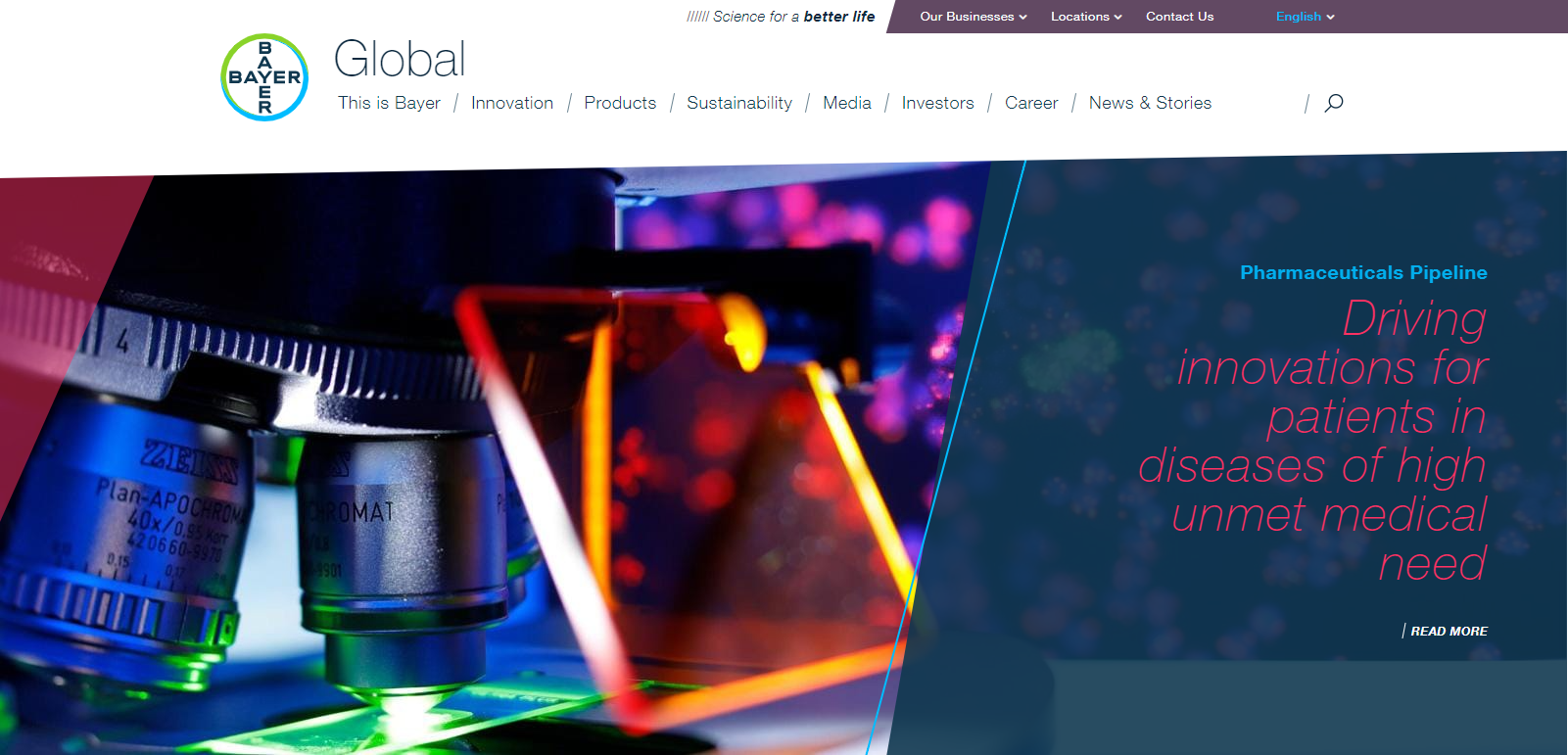
Similarly, Bayer is using a DXP to create a centralized online platform for caregivers, healthcare professionals, and customers alike. The platform also helps consumers to find specialty pharmacies and local care centers.
E-Commerce
With DXPs, modern businesses can customize all facets of their users’ e-commerce experiences. It helps in delivering a richer, more unique experience to every customer by enabling better touchpoints. This kind of personalized experience delivered at scale is bound to drive customer loyalty over time.

The Hewlett Packard Enterprise is using a DXP to create a portal that would revolutionize partner experiences across the globe through flexibility and fast data communication.
NPOs
A DXP for non-profits can refine content authoring, develop site navigation, and hence lead to greater engagement with donors, members, and communities. As a result, the organizations can expect a considerable increase in new donors and improved retention.

Epilepsy Foundation witnessed a 31% increase in organic traffic and 24% increase in new users by delivering personalized content to its users.
Higher Education
Institutes that offer higher education use DXPs to deliver content across numerous digital channels and share data with other systems around campus. On top of this, the platform includes multi-language support, workflow management, an in-built CRM system, marketing automation tools, and analytics to get a holistic view of the students or prospects.
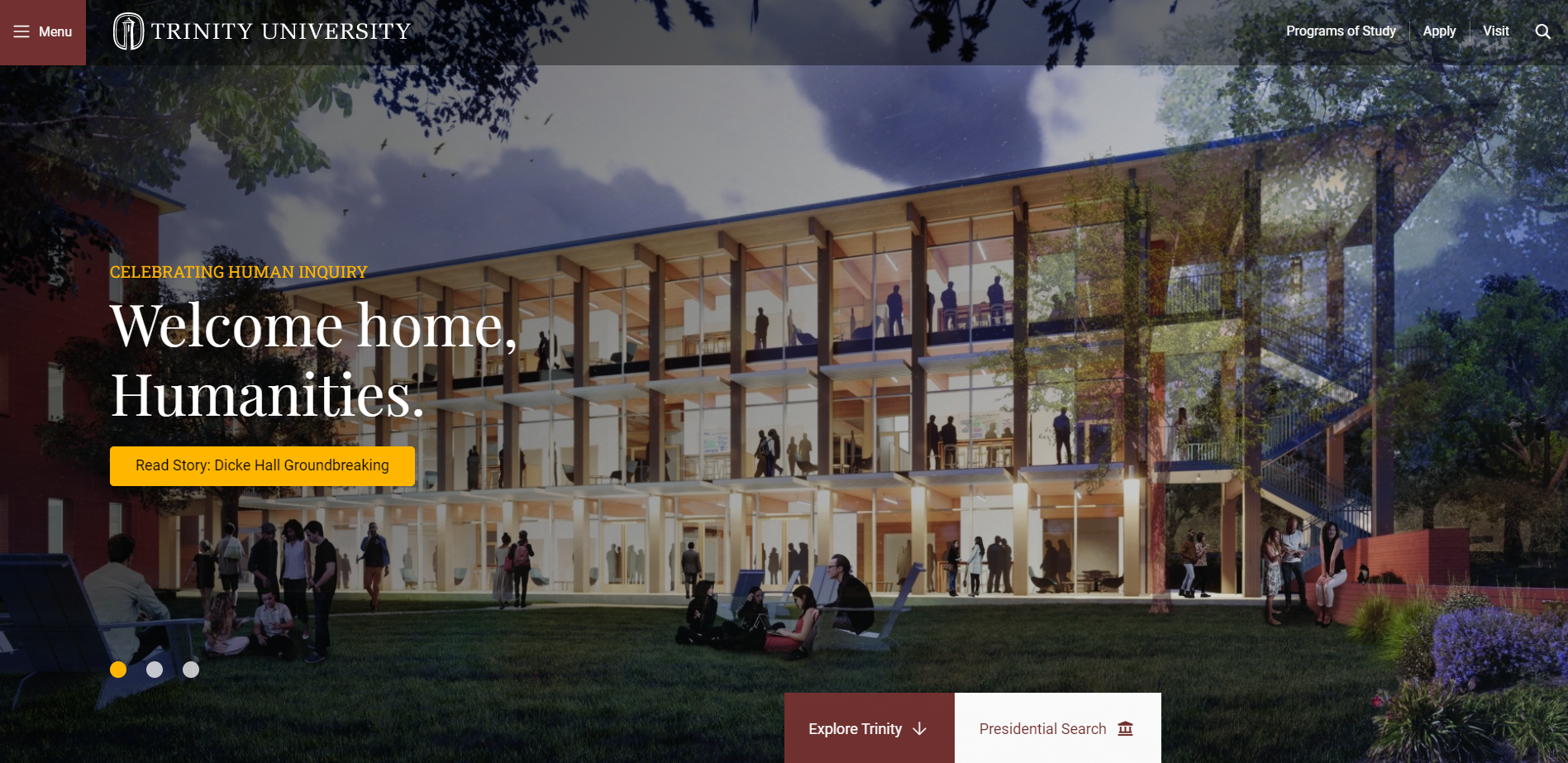
Trinity University leveraged DXP to reimagine its website.
Food & Beverage
All global F&B companies strive to provide an excellent user experience and launch their products and updates as quickly as possible. A DXP helps them keep up with the latest digital trends and improve their presence on several touchpoints.
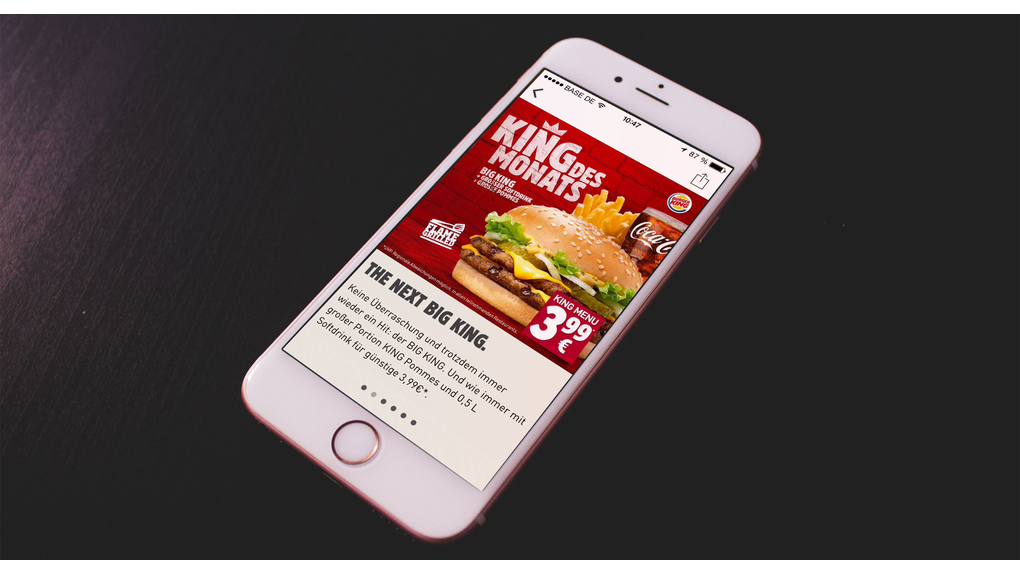
Burger King is using DXP to dominate website and mobile app engagements.
Financial Services
The banking and financial services industry is using DXP to keep up with the rising consumer demand and to introduce an array of customer-oriented solutions into the norm.
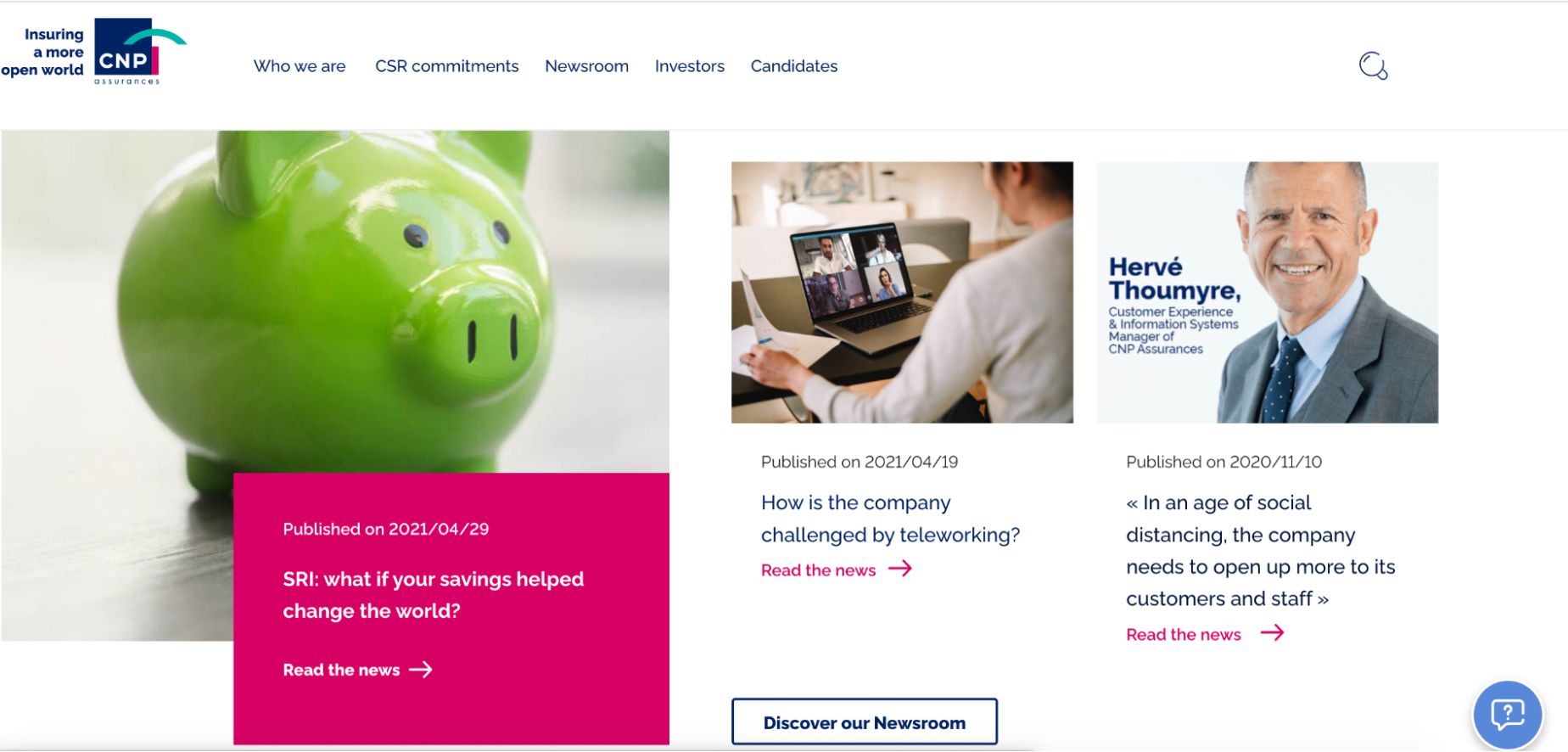
CNP Assurances is using a DXP to overhaul online customer experiences by leveraging page builder capabilities along with the autonomy of creating content quickly.
Does A DXP Fit The Needs of Your Business?
If you are still uncertain whether your business needs a DXP, here are a few questions you need to ask yourself:
- Do you think delivering personalized experiences to your customers can improve your business?
- Do you feel the need to react to your evolving customer demands?
- Are your customers engaging with you through social media?
- Is your legacy tech infrastructure holding you back from evolving?
- Is it necessary for you to update product data regularly? Do you think automating this process can help you become more efficient?
- Do you think selling directly to your customers through a digital channel is the way forward?
If you answered ‘Yes’ to any of the above questions, it’s time to take a step forward and adopt the new norm of DXPs.
Digital experience platforms are being adopted across industries, and the benefits of deploying one are obvious. It delivers personalized, responsive content in real-time by integrating customer interaction data. A DXP can serve the needs of all teams across an organization as it enables them to combine customer data and analytics with omnichannel content management.
As established above, a great customer experience leads to increased revenues. Forrester found that improving CX by a single point in a survey for auto manufacturers can add up to $1bn in extra revenue.
It's important to note that an architecturally strong DXP can integrate with solutions across an organization, allowing businesses to combine customer data with analytics. It’s safe to say that we are on the brink of adopting a new technological solution that is the new generation of delivering omnichannel customer experience.
What Can You Build With A DXP?
A DXP is a one-stop solution for several enterprise pain points. Here's a list of what it can be used to build:
Ecommerce Portals
Ecommerce portals are automated sales machines that are live 24x7 and offer boundless possibilities in terms of the customers you can expect. A DXP unifies customer touchpoints and refines the self-service functionality of an e-commerce platform. It fills the gaps in your customer journeys by offering personalized recommendations to your customers using behavioral analysis to harvest accurate data, thus leading to intuitive shopping experiences.
Furthermore, a DXP offers native knowledge base management for self-service portals that reduce dependency on live agents. It also offers publishing workflows and approvals for your knowledge base. Again, a DXP helps unify all your existing customer service touchpoints to create a more connected experience for your consumers.
Websites
A DXP ensures brand consistency by offering features such as forms, adaptive media, localization, customized workflows, inline editing, audience targeting, user management, etc., to create highly responsive and dynamic websites. More importantly, DXPs empower marketing teams to launch and manage webpage content without further support from the development team.
Intranets
DXPs can also help develop comprehensive intranets for workplaces to meet the needs of an evolving workforce. It can be built to offer a tailored experience to every company with features ranging from business-friendly tools, user profiles, web analytics, secure access to the business's intellectual property, and an integrated CMS to drive enterprise-wide consistency through communication.
Integration Platforms
Most organizations struggle to manage multiple disconnected systems and a unified system that saves them time. A DXP can solve this problem through integration platforms that eliminate silos and connect all databases, thus bridging various disparate processes.
Customer Data Platforms
A customer data platform (CDP) collects customer data, integrates customer profiles, maintains cross-device attribution, and segments customers. While a DXP is used to deliver personalization and manage content, customer relationships, and digital assets, we can build a functional CDP with a DXP.
Analytics
Organizations depend on analytics to understand the performance of their digital products and to measure their growth over a period. And since DXPs carry the heritage of CMS platforms, they deliver web-based analytics that doesn’t take long to set up or process.
Cloud
A DXP Cloud serves as a medium to deliver development tools and application metrics to the IT team, among other features, so that it helps them get more real-time insight into the health of their systems.
Partner Portals
A company’s distributors, service providers, and other stakeholders have special requirements about their access to your marketing resources and sales information. A DXP is a perfect solution for building tailored partner portals that cater to their individual needs. It does so with features such as multitenancy, user management, social collaboration, user management, and role-based content delivery.
How To Develop Your DXP Strategy
Selecting a DXP is a tough decision, given the limited solutions available in the market. With that in mind, here’s a step-by-step guide to developing your DXP strategy:
- Assess whether your organization is ready to adopt the change and whether you have board-level sponsorship for the revamp.
- Determine your end goal and ensure this goal aligns with your customers' needs.
- Select the technologies based on how your customers interact with your brand across touchpoints to cater to different use cases.
- Develop a roadmap with realistic expectations over the next few years and ensure it coincides with the pre-established user journey.
The Road Ahead
If DXP has piqued your interest, and as an organization, you believe that you can benefit from a digital transformation, you should first work on building an e-commerce website. This website will serve as one of your most active customers’ touchpoints, thus laying the foundation for your DXP and whatever you need it to be.
We live in a world where digital user experiences are as mature as the product itself. It’s high time the mainstream adopts this mindset as it’s one of the most functional strategies. It will help you redefine your internal processes and help you customize your digital solutions to the standards the times are dictating.
%2520Help%2520Brands%2520Create%2520Memorable%2520Experiences.avif "How DXPs help e-commerce brands create memorable experiences")
How DXPs help e-commerce brands create memorable experiences
Marquee brands like Forever 21 and Yelp offer personalized experiences on their homepage. They provide customized recommendations for user preferences, such as likes and dislikes, food preferences, and lifestyles, to meet customer needs better. The new features on the Yelp app have earned them 2.4 million users a month, with 2.2 million requests from across 300+ categories. The Californian fashion giant Forever 21 has been prioritizing personalization. They capture customer attention with personalized search results, lucrative offers, and product recommendations. This article discusses digital experience platforms and how they play an important role in creating a great digital customer experience for customer loyalty, retention, and lifetime value. It also covers how digital experience platforms can elevate customers' brand experience and ultimately business for brands.
What is a Digital Experience Platform, and how is it applied to E-commerce?
DXP is a front-end software paired with a back-end platform to create a complete e-commerce system. It helps customers in their shopping journey from finding a perfect product at the right price to completing the order. For this, it collects customer data from a range of digital channels to build, personalize, and maintain customer content.
With a DXP, brands can deliver personalized and compelling product listings and content based on the customer identity and their search and purchase history. DXP works the same way as headless platforms. In e-commerce, DXPs operate as front-end software with a back-end platform for creating an e-commerce system.
Enhancing the e-commerce experience starts with the customer
Three main aspects of customer experience are:
Building unique and memorable user experiences
For brands today, customer satisfaction is one of the important strategies for success in the business. Various brands look into how customers are using their websites, products, purchase history, search history, and feedback to gain user experience information. It helps them create unique and memorable experiences through personalization, leading to customer loyalty.
Shifting the marketing strategies
The end-user experience enhancement is essential while shifting marketing strategies. Market experts shift their plans and strategies from price and product to enhance the end-user experience throughout the purchasing lifecycle.
Personalized product recommendations and user preferences
One of the critical parameters for 21st-century businesses is customer loyalty. Customers are offered product recommendations and user preferences with attractive offers and marketing strategies. It helps them reduce their time searching for the product of their choice. Which in turn builds brand loyalty.
The back-end DXP platform processes payments and manages customer orders and products, but it cannot work independently. Digital channels provide data on the customer search, wishlist, purchase history, returns, and price of previous purchases from digital channels. In addition, it helps create personalized customer information. As per the information, the DXP recommends and indirectly guides the customer throughout the shopping journey of suitable products at preferred prices. The DXP directs the customers in their shopping journey and finds relevant products at an excellent price. It is done with customer data taken from the digital channels to create, personalize, and maintain the customer's information.
DXP helps create memorable customer experiences across multiple touchpoints with in-built templates and tools that allow e-commerce brands to build fully-functional applications.
The basic DXP features:
- AI and Analytics intelligently extract the customer preferences and accordingly provide suggestions while shopping.
- Automation in DXP offers a fast and most accurate analysis of massive data generated by millions of customers every day.
- Cloud infrastructure enables easy data storage and access.
- Content Management System (CMS) allows efficient and effective data management and easy content authoring.
- Digital Commerce speeds up brand recognition by reaching millions of customers at a time.
- Integration APIs connect two or more applications through APIs and quickly exchanges data such as the Google account connected to Gmail, Google Calendar, Google Drive, and other synchronized accounts like social media accounts on Facebook, Instagram, Twitter, Reddit, and so on.
- Personalization offered by DXPs satisfies customers with their preferred recommendations while shopping.
- Omnichannel delivery allows customers to purchase and receive orders from multiple sales channels with one-touch seamless integration.
10 ways in which DXPs can elevate your brand experience
Modern consumers and shoppers crave for guided and personalized user experience. DXPs facilitate improving the search relevance by simplifying information search for users. It offers a personalized and controlled shopping experience by displaying products matching user preferences while shopping. It also helps the e-commerce engines collect customer shopping behavior data to become more intelligent over the period with experience and below tactics:
1. An intuitive UX and landing page experience for simplicity
Brand recognition and enhanced business need an engaging website with an intuitive UX and design. Brands need to focus on three critical areas to create an intuitive landing page experience:
- Websites should be optimized for various devices and gadgets used for digital shopping, such as smartphones, laptops, computers, tablets, and iPads.
- It should have appropriate product categories and sorted landing pages to make the site easily navigable for product search, the on-site path offers and CTAs, optimized payments, order fulfillment, and returns, streamlining the purchases for digital customers.
- The user interface should be simple and easy to track landing pages to make product, content, and information search simple and quick for visitors.
2. Appealing customer emotions for an increased customer base
Customer emotions play a critical role while invoking interest in your brand products and services. Thus, every touchpoint of your DXP must be engaging. Using the latest technologies such as augmented and virtual reality can change the digital shopping experience more than ever before. They offer the edge to convince you of the product by virtually visualizing it and making the shopping experience more tangible, like in shops or malls. Moreover, a combination of photographs and other multimedia content can evoke emotions to impact your online customers positively.
3. Omnichannel customer experience for brand strategies
With marketing performed on several channels or devices that the customers choose, offering a genuinely omnichannel customer experience is necessary for all the brands. Brands need to collect data from all platforms and analyze it for the best marketing and business strategies on each platform based on the information gained.
4. Personalized CX for customer loyalty
For e-commerce, personalization focuses on offering curated content for every customer throughout their journey. As an e-commerce business owner, you can provide personalization through the services you extend to customers' preferences and engagement history. Artificial intelligence makes it possible to analyze customer data, personalize, and tailor your ECX accordingly.
5. Responsive interaction for customer engagement
You can engage customers with newsletters, email marketing, SMS messaging, audience segmentation, chatbot, and live chat for audiences on-site and social media to interact with the customers. You can also incorporate follow-ups after customer engagements using customer surveys after purchase and cart abandonment emails.
6. Responsive support to resolve customer queries
Customers should be satisfied with each query. The FAQ page on your website enables your customer service department to address the issues and find the best solution without reaching your customer support. Other advanced solutions such as live chatbots 24*7 customer support help elevate user experience, keeping up with your brand loyalty.
7. Optimized supply chain for an improved customer service
Supply chain management is all about delivering products on time, avoiding stock-outs and customer disappointments, assuring product safety throughout the supply chain. Therefore, it is mandatory to centralize your inventory data when moving towards omnichannel sales.
8. Several fulfillment options
For popular brands, fulfillment options such as BOPIS, i.e., buy online, pick up in-store, and BORIS, i.e., buy online, return in-store, are becoming increasingly prevalent. They help save on shipping and other fees, ensuring stock availability for earlier product delivery. It is a win-win for both the customer and company as they can save on shipping and restocking costs and get the returned product for reselling.
9. Payment options for easy transactions
There are two payment aspects to consider. One is the different payment methods customers use. You must pinpoint the customers' payment methods and provide a seamless checkout. The other way is to offer subscription service to the customers as it is convenient for goods or services customers use regularly. Offering payment options to the customers can be great to get them to convert. Also, offering financing, layaway, and pre-purchasing to your customers is a good option for businesses.
10. Community support
Creating a community of engaged and loyal customers, influencers, partners, and stakeholders is the ultimate business solution. This community must expand to multiple platforms where your brand operates. One way is to create a Facebook community where customers can share product reviews, user-made content, usage tips, etc. You can also host an online community on your website. Building a community keeps customers informed and productive and adds an element of fun.
Benefits of DXPs for e-commerce platforms
E-commerce platforms can reap some incredible benefits from DXPs as below:
1. Scalable to multiple touchpoints
With DXPs, brands can deliver content to online and in-person touchpoints beyond the web, mobile, chatbots, and customer portals for consistent customer experience on any type of platform.
2. More control over your business
DXPs integrate marketing, trading, and customer service along with real-time solutions. In addition, DXPs can collect relevant incoming and stored data with APIs offering brands more control while interacting with the customers.
3. Scalable architecture with microservices
DXPs function with the agility of the microservices architecture it offers. It enables organizations to evolve their technology stack, making necessary changes and improvements to the platform components.
4. Fueled by insights
The AI in the DXPs offers brands actionable insights at every customer touchpoint. It can find the hidden details within massive data, helping visitors find the relevant information.
5. Personalizations
AI-enabled personalization drives customer loyalty and provides a tailored user experience. In addition, it helps in knowing customer buying patterns to improve the customer experience at every touchpoint.
Examples of e-commerce brands who have adopted DXPs
1. Amazon
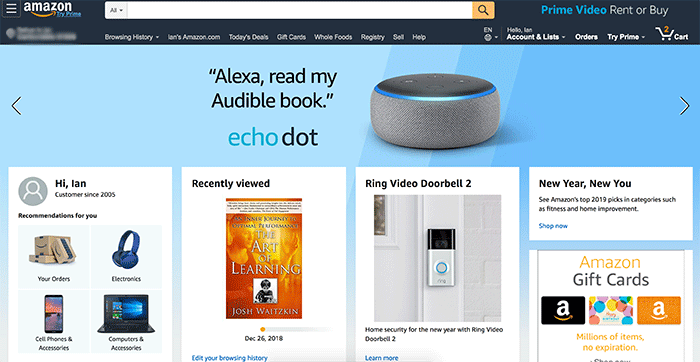
Amazon always tops the list when personalization in the e-commerce landscape is discussed. This is because Amazon accesses the customer data points such as name, search query, search time, purchase history, brand affinity, browsing habits, past purchases, the average spent amount to know customer preferences and market better.
Amazon performs behavioral targeting, predictive modeling, and contextual marketing by anticipating customers' needs using customer data. As a result, Amazon’s on-site recommendations make 60% higher conversions than other brands.
2. IKEA

IKEA has been actively employing AI, making customers interact and use the app to get an idea of the actual store without even visiting, making the buying process easy and engaging. IKEA searches spiked tremendously with the app and established it as one of the most innovative companies.
3. Macy’s

Macy’s has introduced a mobile application for augmenting sales and has reported more than expected earnings. Its mobile checkout app quickens the in-store checkout. In addition, the technology bolsters the self-service feature, making customers browse items with their phone camera and app scanner.
4. Starbucks

Starbucks has launched an app-based customer rewards program to customize their beverages and order products. In addition, it introduced gamification to engage with in-app customers and personalized them for users’ screens. This rewards program earned Starbucks a revenue of $2.56 billion, generating $6 million in sales per month. In addition, Starbucks drives real-time personalization with app-centric data. Their AI engine serves individualized customer offers based on their activity, past purchases, location, and preferences.
5. Walmart
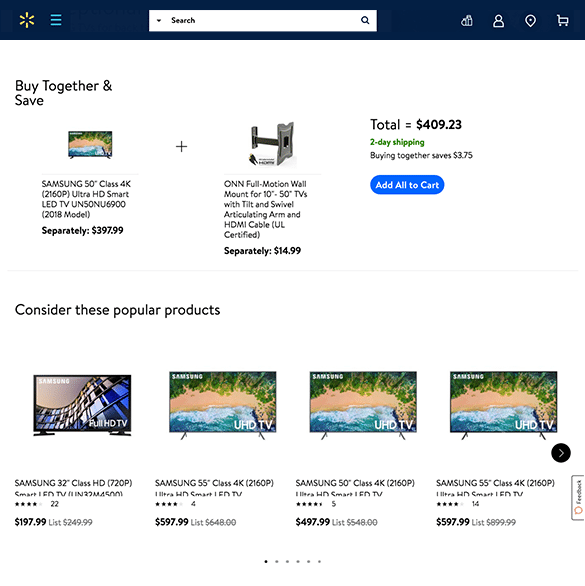
Walmart achieved a 40 percent increase in sales and a 10 percent stock boost in 2017 by a website representing trending items. In addition, its recently launched Store Assistant mobile app has helped it transform the overall customer shopping experience.
Types of DXPs and their e-commerce applications
Here are the three DXPs and their E-commerce brands applications:
1. CMS DXPs
CMS DXPs work on analytics and persona-based segmentation for generating demand, acquiring customers, accelerating sales, personalizing promotions, and content delivery.
2. Commercial DXPs
Commercial DXPs display promotional content on their websites and offer add-on features of pre-purchasing, product returns, payment, inventory, and shopping cart management.
3. Portal DXPs
Portal DXPs increase customer loyalty and retention with CMS mobile support, workflow automation, and front-end representation to the e-commerce brands.
Conclusion
The 21-st century digital era is modernizing with advanced digital technology in all sectors. It has brought a new marketing strategy for businesses, like enhancing digital customer experiences through DXPs. DXP enables businesses to reach millions of customers in a few seconds, make modifications on a website and enlist new products through digital product launches. It helps improve the customer experience by personalizing products they view based on their search, purchase, return, and even price preferences in historical data. Reach out to QED42 for a digital experience you would have never imagined before for your business and brand, and transform your business into intelligent entities through their innovative marketing strategies and expertise.

Changing the future of DXP with Design
With an ever-growing digital ecosystem consumers nowadays expect an experience that’s not just relevant and consistent but also serves a meaningful purpose. Brands are on a constant quest to serve reliable and cohesive experiences that ensure smart communication of their product through personalized design; something that’s limited only with the help of a Digital Experience Platform (DXP).
What is a DXP?
DXP is a collection of fundamental technologies that allows teams to build, manage, deliver, and enhance contextualized digital experiences. It helps in connecting digital touchpoints into a smaller and more manageable well-informed ecosystem for marketers.
DXP combines the power of several technologies such as e-commerce, Digital Asset Management (DAM), campaign management, customer relationship management (CRM), customer data platform (CDP), and other personalization tools.
Types of DXP
There are two distinct types of DXP - a closed DXP and an open one.
- Closed DXP - is a self-contained platform with all DXP components and products integrated into the system. Rather than relying on third-party tools, a closed DXP provider develops and maintains all DXP components, which are then provided as a package. Not to say that a closed DXP can't operate with other products but it just works best within its own ecosystem.
- Open DXP - is a system that combines items from various third-party providers into a single, centralized system. An open DXP gives businesses the freedom to incorporate products of their choosing. Several open DXP suppliers additionally provide clients with pre-built interfaces with third-party products that have been verified and are ready to "switch on" in the system.
Design as the Future of DXP
When it comes to the future of DXP, design plays an integral part. Design offers constrained acceleration wherein there’s overlapping of rules and a designer is expected to do implementations.
Design ensures people-first experiences wherein users don’t face any difficulty when interacting with a design/product. Similarly, a DXP + design model focuses on creating a holistic digital experience for end-users through the personalization and identification of a user’s immediate needs.
When Design is incorporated into a DXP, teams are able to innovate and build experiences that are flexible, intuitive, and consistent. Design is the differentiator in DXP that allows the incorporation of multiple components with several permutations and combinations. Ideas from the Designer’s toolkit into a DXP ensure an experience that is in sync with the expectations of the brand and tailored according to the needs of the business.
Benefits of DXP and Design
A DXP + Design model is built to eliminate constraints and fuel innovation by focusing on the digital experience through a people-first approach. Businesses will get the following benefits with this correct model in place -
- Ensures flexibility and acceleration of projects through quick and smooth integrations.
- Has its own design language and isn’t limited to a set of components, allowing for multiple permutations and combinations of the components, as per brand specifications.
- Perceptive customization via machine learning and cross-channel insights into consumer insights, preferences, content consumption, and more.
- Comes ready with pre-built widgets and components that help in reducing implementation and integration time.
- Methods for creating turn-key content for more nimble online marketing and less dependency on on-site developers
- Provides a 360-degree perspective of the consumer through proper analysis and implementation of online and offline data.
- Governance measures help maintain material consistent with the business, safeguard client information, and reduce risk.
For all these reasons and much more design is the only differentiator, a seamless way to innovate, and the future of digital experience platforms.
Conclusion
With the digital ecosystem showing constant growth every day, a positive digital experience is a priority for users. DXPs and design enable brands to have a stable digital presence. Its seamless integration of different aspects of a brand helps to provide insights that are based on user interactions. While a DXP helps to bring in users and ensures a digital presence that helps a business stay omnipresent and updated, the design ensures an experience that is flexible, smooth, and cost-effective. It also enables the sartorial use of components while retaining brand uniqueness, thus making the process smoother, quicker, and better.
At QED42, our team of experts makes use of DXP + Design to build holistic digital experiences for businesses and people alike, ensuring a competitive edge in the ever-growing digital landscape.

Jumpstart your Digital Transformation with a Digital Experience Platform
Digital experience platforms (DXPs) are becoming extremely popular these days. Companies looking to enhance their customer experiences and meet demands use DXPs to up their game. It's because DXPs can offer seamless customer experiences across multiple channels.
Adopting these platforms are important as customers are getting pickier by the day. As they want connected experiences on their phones and laptops, companies utilize DXPs to create personalized and unique customer experiences.
DXPs have become the perfect tool for digital transformation, connected offerings, and enhancing business operations. So, if you're looking to adopt a DXP for your firm, this blog will tell you all that you need to know.
What are Digital Experience Platforms?
DXPs came into action as more companies wanted to deliver customer-centric services and experiences. That's why its features are based on familiar technologies businesses already use, such as CMS and web portals.
By 2024, the DXP market is expected to skyrocket up to $13.9 billion! Before we talk about the "how" of DXPs, let's start with the "what."
What's the deal with DXPs?
Well, you can consider them as platforms that enable the hosting, development, and distribution of high-quality digital experiences for users.
- It helps companies organize and offer connected experiences on all touchpoints. These channels include social media, web, and mobile, along with digital displays, wearables, and digital home devices
- It is a type of enterprise software that optimizes digital interactions and helps acquire user insights
- Depending upon the company's goals, products, and services, the DXPs can include these services and other functions too
Usually, companies purchase various software suites to develop these experiences for different channels and markets. But a DXP acts as an integrated platform combining everything – CMS, e-commerce solutions, analytics, search, marketing, and much more.
Who should use Digital Experience Platforms?
Digital experience platforms enable companies to develop digital experiences with outstanding consistency and speed. These platforms integrate content, commerce, and customer experience to deliver a more personalized and interactive experience across multiple channels.
If this is what you want, then DXP is the perfect enterprise software suite for you. DXP will suit you if you encounter the following situations -
- You have multiple online and offline digital touchpoints for connecting with your customers
- You want to segment your customers and target them properly via the various touchpoints
- You generate most of your revenue from online business
- Reaching an international audience across the world is one of your primary targets
- The various front-end and back-end systems are not in sync
- If you want to increase customer loyalty and deliver personalized experiences
On top of all this, DXPs allow you to have more control over your digital touchpoints and marketing strategies. The flexibility to upgrade or change the various tools also lets you enhance your services.
In short, if you want to capitalize on integrated technology and offer the best user experience possible, DXP is the way to go.
How can Digital Experience Platforms drive Digital Transformation?
If you feel that your company is lacking technical prowess, it might be time for digital transformation. And, as you might guess, DXPs are currently the best options for such a change. But, selecting a DXP is just getting the job half-done.
Here's how you can utilize DXPs one step at a time for a successful digital transformation.
Figure out the needs of digital customer experience
As you're aiming to deliver seamless and personalized experiences, you need to start by understanding your customer's pain points. You have to figure out the customer's requirements, problems, and issues faced during their buyer's journey.
Data Analytics tools within the DXPs might give you a better insight into this. After you've figured that out, you can start working on creating a better digital user experience. You can either enhance your existing customer offerings or develop a new one.
Being a completely data-driven strategy, you'll observe the change in quality open these experiences. It will also not limit you to a specific type of customer interaction idea. You'll get all the appropriate tools for development from your trusted DXP!
The enterprise software will offer you the following pros in this regard –
- This transformation will enable you to figure out the gaps in communication between your customers
- You can determine the faults in your user interaction delivery
- Understanding the customers is more convenient in this way
Enhancing the accuracy of marketing and customer engagement strategies
The best way to improve the accuracy of your customer experiences is to understand customer behavior better at every digital touchpoint. By tracking customer interactions and analyzing associated information, you can bring a radical change to your user experiences.
This is where digital experience platforms come in –
- It allows you to pull data from various digital touchpoints to take a closer look at your customer
- This information will include transactional data, demographic data, product preferences, marketing campaign interactions, and social media activity
- The DXP will enable you to combine this information together and develop a single holistic view of your customer
- All this information will enable you to derive behavioral insights about your users. You can improve your existing experiences using this data
Omnichannel experiences
DXPs will also allow you to offer better omni-channel experiences to their customer base. This digital experience can span across various channels that are perfectly synchronized and connected. Users can start an introduction on one channel and complete it on another.
The DXP platform insurance that this entire experience is seamless without glitches.
Use the flexibility and integration to stay updated
When you are using various technology platforms such as a web portal and a CMS, you have to upgrade them frequently. Although it's absolutely necessary, you might be worried about the steep expenses that come with it. But with a DXP on your side, it's time to de-stress!
DXPs offer a high level of flexibility and integration, which helps you cut down a lot of expenses.
- As the platform integrates multiple software tools together, updating them is convenient and cost-effective. Plus, the hassle of upgrading everything one by one is also gone
- The fact that digital experience platforms let you handle all the tools easily makes it easy to focus more on user experiences
- In addition, if you want to utilize some new tool or software, adding it to the DXP is convenient. You'll save a lot more than buying the tool individually
So, you can call DXPs a fantastic long-term investment. They’ll help you reduce expenses and stay updated with the latest tech trends.
Centralized location to collaborate experiences across the customer’s journey
Digital transformation depends a lot on proper integration and data collection. That's why digital experience platforms focus so much on integrating tools, connecting silos, shifting agile workflows, and creating feedback loops. All this helps you to craft better customer experiences.
This amazing enterprise software offers you the infrastructure required to collect customer information from various digital channels.
- Acting as a centralized data repository, you can refer to it for developing any User experience
- These platforms are powered by machine learning, enabling you to derive insights into customer behavior
- Along with feature-rich dashboards and suggestions, you get KPIs to track the performance of your ventures
- DXPs also help you keep your objectives and products aligned
- You can also improve your customer experiences constantly by measuring their effectiveness
So, digital experience platforms take care of a vital phase in digital transformation - data integration.
Improve employee productivity
Apart from providing you with everything required to develop enhanced user experiences, it also helps your workforce. DXPs enhance employee productivity and experiences.
But how? Any digital experience platform facilitates data sharing and exchange.
- As a platform works on integrating data, your employees can access it to fetch any type of user information. It makes work more convenient for everyone, which in turn speeds up the processes
- Convenient data exchange directly impacts communication. When you get everything under one umbrella (the DXP), employees can communicate easily and effectively. In addition, this helps in bringing down inter-departmental barriers
- So, during those intense brainstorming sessions, everyone can collaborate easily and come to a decision
What's more? Digital experience platforms also offer you multilingual tools to manage data with ease. Plus, you get a lot of scope for customization with these platforms.
Your team can easily modify the settings, upgrade software packages and make other changes without hassles.
All these aspects contribute towards organizational growth and improving employee productivity. And that drives your digital transformation process forward.
Closing thoughts
Digital transformation is the need of the hour and the best way to stay in the game. No matter how unique your products and services are, a digitally upgraded experience will help you stand apart. After all, it's not all about the products, but the experience you offer with them. These platforms are going to be the craze in the coming years. So, be smart and start using DXPs now to stay ahead of the curve. With improved collaboration, customer tracking, and data collection, it's your time to rule.

How does an open DXP enable flexibility and speed to market?
Organizations stay competitive in today's online world by establishing connections via digital communication, which involves speaking and listening. Content is used to talk, while data is used to listen.
A Digital Experience Platform or DXP is a cohesive set of basic technologies that facilitate the configuration, administration, delivery, and optimization of contextualized digital experiences.
Digital Experience Platform (DXP) is an integrated range of core technologies for engaging a wider customer base across many devices and touchpoints. It employs a series of integrated technologies to regulate a huge spectrum of touchpoints.
Furthermore, it serves as the control center for this extended experience by serving as a single-core platform.
DXPs provide firms with a unified set of tools for developing genuine relationships with customers, leads, associates, staff, and other audiences by speaking and listening to them. They enable organizations to provide content to any touchpoint, such as ads online, in-store, at a kiosk, or in an e-commerce network.
It can predict what they are interested in buying and then present them with related materials and possibilities when they are ready to choose. Digital Experience Platform is a new type of software solution. It contributes to improving customer experience and, as a result, attracts consumers to businesses that utilize DXP.
The advantages of using a DXP cover a range of subjects. They directly benefit customer interactions, but they also assist the organization in establishing control over every touchpoint.
It is built around a flexible structural design and helps integrate the business or its operations. Read on till the end of this article to learn more about the benefits of DXP.
Why is it better to have a DXP?
As discussed earlier, the benefits of a DXP can be seen in many aspects of the functioning of a business. Some of these are described in detail below.
Security
A comprehensive framework for monitoring all of your digital channels improves security and performance. It helps in the reduction of technological debt. It additionally protects customer data and ensures that it is received across all vast digital channels.
Gartner Research defines DXP as "an integrated set of technologies, based on a common platform that provides a broad range of audiences with consistent, secure, and personalized access to information and applications across many digital touchpoints."
Personalisation
DXP seamlessly integrates with other systems, including CRMs, telephony, and social media. As a result, it gives a 360-degree overview of every client the business encounters. The platform also provides the organization with intuitive dashboards and rich insights powered by machine learning. Consequently, it helps in the personalization of your interface.
Regarding customer advantages under the subject of "personalization," DXP delivers the correct value at each touchpoint. For instance, an organization has all the necessary information about you before it makes the call. This information is given to the firm through the relevant form you filled out online.
It makes complex websites easier to manage
DXP was among the first systems to effectively merge multi-channel marketing experiences. A DXP compiles and examines the search, browsing, and purchase histories of customers and their social media activities, locations, and demographics.
It can predict what they are interested in buying and then present them with related materials and offers when they are ready to choose.
A DXP extends beyond a CMS or WEM by assisting a brand in creating digital experiences across websites, applications, portals, IoT devices, and other platforms. It comes with APIs that help in building sites that are easier to govern.
Examples of DXP
Bloomreach Experience
It is a commerce-heritage DXP vendor that specializes in retail transactions in the e-commerce scenario. The retail transactions span across fashion, food, entertainment, travel, electronics, and the like.
Liferay DXP
It is a portal-heritage DXP vendor and focuses on insurance, retail banking, governance, and manufacturing. The DXP undertakes in-depth interoperability for an improved client experience.
FirstSpirit DXP
It features a hybrid headless CMS, customization driven by AI frameworks, and support for multi-channel marketing. Marketing experts rely on FirstSpirit for customized and synchronous content distribution across all platforms to inspire customers to act.
Drupal
Drupal is one of the finest Digital Experience Platforms available on the internet, and it is fully open-sourced. It offers strong content management technologies as well as advanced APIs for multi-channel distribution. Acquia has been crowned a Leader in Gartner's Magic Quadrant for Digital Experience Platforms (DXPs) 2021 study.
Acquia is known for its ability to execute and the breadth of its vision. Their architecture and platform design, extensibility and integration, and cloud capabilities were some of the factors that contributed to the overall distinction.
Open against close? Which DXP is better?
What is an open DXP?
An open DXP is a platform that unifies digital experiences by combining various products from different sources to function and behave as one. As a result, organizations that have a large digital presence and own various digital experience products will be able to make greater use of Open DXP.
Such organizations can easily link your digital experience with a platform like SalesForce by using an open-source DXP like Drupal.
An open DXP flourishes on the alliance, coalitions, creation, and assistance for common accomplishment. In Open DXPs, there is a combination of open-source components and closed services.
It is distinguished by a collection of best-of-breed components. Open DXPs use a bottom-up method in which a platform is developed to accommodate the relevant challenges.
With an open DXP, you can effortlessly develop and offer accurate experiences to your customers. An open DXP enables IT teams to accomplish more by delivering enterprise features, basic web components, and low-code site-building alternatives that allow teams to rebuild digital experiences as needed without the cost of re-platforming from scratch.
What is a closed DXP?
A closed DXP consists of all key DXP components; however, it is a "limiting" choice. There is very little choice between vendors as all of these components are maintained by a single supplier and interface with other applications.
Closed DXPs are all-in-one platforms that comprise all the particular portions of a DXP as a sole network. Closed DXPs acknowledge the merits of closely correlated components and supply all of them through a unified portal to fuel the interaction. Adobe Experience Cloud is an example of a closed DXP.
What should you choose?
Choosing the correct strategy from these two DXP models might be difficult for an organization because it relies on what the particular firm aims for. Nonetheless, to make a choice easier, let us make a list of the major differences between Open and Closed DXPs.
We believe you now know what choice to make after three of the major and most important differences have been listed in favor of Open DXPs!
What benefits does an open DXP bring to you?
Adaptable with future
An open DXP is developed API-first and supports the notion of connecting with third-party tools. Thus, implementing a prospective product into the system is relatively simpler than in a tightly coupled DXP, which makes claims about the technological stack. The only way to be fully prepared for an unforeseen situation is to use an open DXP.
Cost-effectiveness
Open DXPs serve as a central management tool, allowing you to manage several sites, all the while offering the flexibility, security, control, and efficiency that you need. Once you have it, there would be very little potential for resource duplication, whether it is in IT or marketing. It will indubitably be a worthwhile investment. Furthermore, an open-source solution is a hybrid of microservices and SaaS, which makes sure that you only pay for the services you want and nothing more.
Extensibility
An open platform is created for extensibility by utilizing integrations and open APIs. This assists you in eradicating repetitive data and content silos and enables you to navigate through them comfortably. Open digital experience platforms characterize them with extensibility as they are malleable and can be altered per individual requirements.
Flexibility
Open DXPs are characterized by the unification of various products by multiple providers. Thus, it facilitates the synchronization of various kinds of functional tools. Open DXP is an API-first framework and allows for interoperability with both purchased and indigenous technologies. It provides more flexibility than an exclusive outcome. An open digital experience platform empowers you with the skill to renovate discrete areas of the program over the period.
Less time to market
With an open DXP, there is no vendor lock-in or dependency on improving their software capabilities. This framework makes it possible to build, produce, modify, and govern digital experiences across the client lifecycle. Moreover, you have control over the DXP, its components, and how soon you wish to grow its skills. As a result, instead of depending on a vendor's software roadmap, you essentially control the speed of your DXP abilities.
Conclusion
Effective communication is essential for digital survival, and DXPs provide organizations with the tools they need to seamlessly engage with their audience.
By integrating various technologies, DXPs streamline content delivery and data analysis, enabling businesses to tailor their digital experiences to effectively meet customer needs. This, in turn, helps build trust and meaningful connections, regardless of the company's size. Scalable solutions offered by DXPs ensure businesses can grow their online presence while maintaining strong audience engagement.
To explore how your business can benefit from a DXP implementation, reach us at business@qed42.com or simply leave a query.

E-commerce DXP: Changing the way customers shop
Did you know that customers, both B2B and B2C, shopped for some things which they never thought they would buy online, during the pandemic, Bloomreach found in a study. The same report mentions that “44% of B2C buyers and 58% of B2B buyers say they always or often research a product online before going to a physical store”
The digital trends that have emerged during and post the pandemic will shape the rest of the 21st century. We are standing at a juncture where the old and existing e-commerce models are crumbling and new digital strategies are taking shape which will create the winning difference in tomorrow’s age.
Today customers live in a connected multiverse with simultaneous interaction happening on multiple devices and platforms. Businesses need the ability to not only just control the digital experience that they are offering (at every single one of those touchpoints) but also the ability to predict the user behavior and then offer tailored, customised content according to their needs.
Age of the consumers
What do you think is the reason that a single mishandled customer can snowball into a full-fledged controversy and a PR nightmare? It's because of the fact that we are in the ‘Age of the consumers’ as Forrester Research calls it. Today, customers have truly become the king, with their presence on every platform and device which have changed the engagement models dramatically.
All this has been put to fast forward during and after the pandemic. With brick-and-mortar stores shut all through 2020, all across the globe, more and more businesses found themselves thriving on the digital landscape. The trends that have emerged clearly showcase that it's only a matter of time till all of the businesses will move to a 100% digital mode.
For an e-commerce business, it's even more challenging. For a B2B e-commerce, even more than that. Data from Statista shows that in the United States, there were 10 connected devices per person in 2020. Thus, the challenge for businesses (both B2B and B2C) has exploded manifold.
How traditional technology stacks are now incomplete
At the beginning of this century, content management systems were all the rage. With all the nifty features and advantages (of that time), CMSes were quite advanced for a fair amount of time. But the needs of the customer, and the businesses evolved and CMSes started feeling inadequate.
Next came Web Experience Management platforms, which were a much better addition to businesses’ technology stack. WEM platforms were an expanded version of the CMS with the neat addition of analytical tools.
But the evolutionary machine was still on and advancements were still demanded from these platforms on a holistic and nuanced level. This is what gave birth to digital experience platforms.
What do modern e-commerce businesses need?
Do you think that your business will benefit from an “integrated set of core technologies that support the composition, management, delivery and optimization of contextualized digital experiences.”
If you answered yes to the above question, then you need a Digital Experience Platform (DXP) for your business. This is how Gartner defines a DXP.
The ultimate tool in any modern e-commerce business’ arsenal, DXPs are tools that you need to talk to and listen to the customers. Agnostic of the platform, device, geographic and every other digital constraint enterprises are facing.
For an e-commerce business specially, DXPs can create the winning difference by placing the right content on the right platform at the right time for the right customer. Leveraging advanced technological innovations such as Artificial Intelligence and Machine Learning, DXPs offer personalisation at a level never thought was possible.
Various components of a DXP machine
The Gartner definition talks about an ‘integrated set of core technologies’. So what are these core technologies?
- Content management systems: CMS, organises all the content and keeps it ready for delivery as and when required. It also gives the businesses strength to publish and manage content without the need for IT support.
- E-commerce platform: One of the two most important parts, the e-commerce platform enables transactions and carries vital importance with payment gateway and cart functions, critical to any e-commerce business looking to create a digital footprint.
- Product information management: This is the part where you keep all your product’s data and the system sorts it out according to various parameters.
- Enterprise resource planning system: ERP systems define the price, inventory, discounts, offers and various other dimensions of an e-commerce business.
- Digital experience platform: DXP is the heart and soul which connects all of the above mentioned components onto one single which can be easily operated by all the departments of the businesses.
How do DXPs elevate the E-commerce digital experience
Using a DXP, you can convert leads faster, display product information in a better and an elegant fashion while engaging the customer on an entirely different level. These are the few functions that a DXP performs in order to achieve this.
- Enhanced touchpoints: An e-commerce DXP not only streamlines the digital experience you want to offer, but also enhances the touchpoints with which your audience interacts. As time passes, the number of touchpoints is growing exponentially, reaching beyond chatbots, customer portals, web, mobile etc. In such a scenario, a DXP can help your e-commerce brand by delivering a consistent brand message across all of these touchpoints.
- Enhanced business control: DXPs merge the businesses’ marketing, customer support, e-commerce portal into one single platform giving you absolute control over the interactions and engagement that customers have with your brand.
- API-driven architecture: Using an advanced API-driven architecture, an e-commerce DXP allows you to integrate various services which lets you deliver a truly exceptional digital experience. By having modern interfaces like chat bots, voice search and social media all integrated on one platform, you can elevate the customer experience manifold.
- AL & ML: The AI & ML algorithms built into your DXP give you actionable insights to work with. That too across all possible points of interactions across your digital experiences. Insights buried beneath huge volumes of data can be pulled out using artificial intelligence and machine learning which you can then implement to elevate the customer’s digital experience.
- Personalisation at its core: Using the insights derived from the AI & ML engine, you can tailor the content according to each customer’s needs and preference giving them something to look forward to each and every time they visit your website. This helps in increasing conversions.
Top 5 DXPs for e-commerce
Acquia Open DXP: Acquia’s Open DXP combines data and content to deliver exceptional business results on a flexible and open platform for all your e-commerce DXP needs.
Adobe experience manager: AEM delivers fast, content led experience combining the power of a content management system with digital asset management.
Salesforce experience cloud: Salesforce Experience Cloud lets you build connected websites, portals and applications in a fast, swift and agile manner resulting in faster audience engagement and interactive sites.
Sitecore experience platform: Sitecore experience platform combines customer data, AI and analytics to provide real-time customization across an omnichannel delivery.
Drupal DXP: Drupal is a great open source platform which can be used to build Digital Experience Platforms for e-commerce companies. With its API-first approach and modular architecture Drupal emerges as a great contender for an e-commerce DXP. Drupal being open source, costs much less than other DXPs in the market. There are an abundant number of modules to pick and choose from, to customize your DXP. It also integrates easily via its API-first architecture and blends it all very smoothly to offer a powerful digital experience platform for your e-commerce business.
Conclusion
We have hands-on experience building digital experience platforms that exceed expectations. We have done this for numerous e-commerce clients till now and can do the same for you. All you have to do is get in touch.

Digital experience platforms - designed for digital transformation
Customers are the revenue drivers for any business; if there are no customers, the services and products churned out are of no use. The world is evolving fast, and businesses need new ways to fill up with these emerging changes while keeping in check with their clientele's needs. Thus, any business needs to connect with their customers on all possible levels and ensure that they're satisfied, and here come Digital Experience Platforms.
What is a DXP?
DXP or Digital Experience Platform is integrated software. This centralized foundation will help a company escalate its customer experiences while making its online presence more engaging by simultaneously connecting to all relevant digital platforms. It also helps them cater to their customers better and boost customer satisfaction.
DXP is changing everything and gathering the attention of all businesses as its main focus is customer experience and customers are the key to the longevity of any business. So businesses have to be more customer-oriented to sustain their businesses and to make them thrive.
Every online business has its presence on various online platforms, and the connection between different platforms should be seamless. To achieve this, businesses have to create exceptional omnichannel customer experiences. Omnichannel customer experience allows your customers the benefit to get all their history with your brand in one place; it connects all touchpoints over all channels of a particular customer. It creates a hassle-free environment for a customer and gives a business a lot of important insights about the customers and their browsing pattern, change in taste, or behavior.
Furthermore, there's also a digital transformation process that is used to upgrade your existing online business, its customer experience, business model, culture, domain, everything using different technologies to reconceptualize the already existing business. DXP plays an important role here; it helps you keep up with the changing digital market while improving your business and ensuring customer satisfaction.
Why is digital experience important for companies?
A large chunk of today’s market consists of e-commerce; every business is looking for opportunities to expand its reach and incorporate new customers. Taking any business online provides you with an endless customer base; it gives you global customers 24/7. Since the business is online, it uses different platforms to reach its customers, like websites or social media, and the customer must receive the best experience to visit/purchase again; thus, digital experience plays an important role for companies.
DCX or digital customer experience is another integral part of any online business, and these are the customer touchpoints while interacting with a business. It includes things that frame a customer's perspective towards the business. It includes browsing history, most visited products, inquiries, etc.
Key needs for any business include
Remaining competitive in the market: If your digital experience evolves with time and incorporates the market changes, your business is sure to remain in the competition.
Retention of customers: If you provide your customers with quality digital experiences and satisfy their needs, customers will stay loyal.
Earning profit: If the business' digital experience is good and has been evolving with satisfied clientele, the business is bound to earn profit.
Why is it important to stay updated?
Everything in a business revolves around what you're providing to your consumers. As the customers change, the market also changes, and if a business wants to thrive and stand out, it must be aware of all new changes, technologies, and upgrades. It also creates a positive image for your brand; if you regularly update your online content and designs, the customers will be more likely to rely on the information, building trust.
Keeping everything updated is also necessary for checking that every function on your online domain is working efficiently and smoothly, free of any bugs that may hamper a customer’s digital experience.
DXP and how it helps
As mentioned above, DXP or digital experience platform is integrated software containing all the necessary technologies that will help the user embrace its digital transformation and deliver contextualized digital experience and the eventual motive to satisfy the customers.
DXP is tailored in a way to match the hyper-competitive changing market. It helps the user adapt to these market changes quickly and efficiently because this software includes all the essentials from content, personalization, and customer data.
It helps users solve the biggest problem, i.e., customer satisfaction. It aims to better customer experience and thus tracks every customer move and all experiences; it collects all the data from across the channels and makes it available in a centralized place. It further records customer insights, feedback, and inquiries.
Open DXP and its scope
Open DXP is based on an open-source code base that is freely available. It reduces the license fee as you pay for what you use, which makes it cost-effective. It is an open architecture where you can easily update components, and it gives you that flexibility.
It allows you to create a personalized DXP that best suits the needs of your business. It has easy-to-use tools that help the user customize digital experiences by adding/removing anything that suits them best without re-platforming.
- It is easier to manage as it has fewer complexities as it follows an open framework
- It's versatile; any customer interaction on any application or interfaces open DXP puts it in control
- Provides data security and stability
Different DXP's offered
AEM Adobe Experience Manager
- It aims to help provide the best user experience helping the developers boost their client and marketing strategies.
- It is easy to use, create data, and store
- Centralized data management
- Automated creation of data groups
Acquia
- Acquia is an open-source DXP foundation that focuses on your business’s choice and helps you create your DXP in a way that caters to all your channels.
- Simplicity in integration
- Scalability in authority
- Data security
"Our business is heading, focusing on the digital customer experience while being mindful of the real need for flexibility and scalability."
- Acquia
Features of DXP
The features of DXP are bifurcated into different categories :
Content management features
Content management refers to the process of producing, receiving, governing the digital content that's produced. Features under this help create media libraries, design pages using a drag and drop interface, structure content, etc.
- Page Builder
- Structured Content
- Digital Asset Manager
- Multi-site management
Digital Marketing features
This helps execute digital marketing campaigns across different channels, providing customers personalized experience on the web, email marketing, updating social media channels, etc.
- Personalization
- Search
- Recommendations
- Campaign management
Digital Commerce features
This includes payments, promotions, discounts, etc.
- Shopping cart and checkout process
- Product information management
- Promotion and discount
- Multi-store management
Analytic Features
This includes tracking data and analyzing performances with customizable reports and real-time statistics and insights
- Reporting
- Web analytics
- A/B testing
The platform features
It provides a secure platform that increases performance.
- Scalability and performance
- Security
- Deployment tools
- Extensibility and customization
Integrations
A DXP tends to offer the following integrations:
- Integration Bus
- Authentication
- Translation management
- Payment providers
Benefits of adopting DXP
DXP allows the users to keep up with the fast-growing market by providing software that can help them add or remove data without the hassle of taking up a whole new solution, and it is providing them with one integrated software for everything using all essential technologies and giving businesses the digital transformation as a whole.
- Controlling every touchpoint: DXP provides better touchpoints; it gives the user access to all possible touchpoints across all business platforms. APIs coordinates and collects all this data from the touchpoints, even from AI chatbots.
- Personalization information: It provides individuals with personalized information and tailor-made experience based on their credentials.
- User-friendly- DXP is easy to use with a good user interface and with just a few clicks, you can make necessary changes. The drag and drop option is also available.
- Headless infrastructure: DXP's architecture is smart as it is flexible. It is a microservice architect and self-contained, so back-end developers and marketers can make changes independently without affecting anything else. It provides rapid and reliable changes.
- Omnichannel development and utilization: DXP is a collection of different technologies that scale across all channels and get various aspects like content, marketing, and data together to optimize omnichannel utilization.
- Security: DXP provides its user will top-notch security in the collection of data across all channels
- Cohesive digital identity: To get your brand to be reputed and recognizable, it needs to follow branding consistency, and DXP provides content and management features that help businesses maintain a cohesive digital identity across multi-channels.
- Removes Silos for improved Efficiency: Siloed systems make any business inefficient as the free flow of information is very important, but due to digital multi-channels, often enterprises get lost and remain unchecked; thus, it's crucial to remove them, and DXP provides a wide array of integrations that help overcome this issue.
Conclusion
In conclusion, if you want your business to grow and explore new domains to gain more customers, DXP is the golden tool for your business's digital transformation. It provides you with a plethora of benefits just in one software that can take your business to the next level.

DXPs - Rethinking the Digital Experience
Brands need to provide content experiences outside a website, justifying the shift from web content management to DXPs. Digital Experience Platform's empower brands to craft individualized experiences in real-time, delivering this consistent experience anywhere, each time!
What is a DXP?
Digital Experience Platform (DXP) is an integrated software framework for servicing and engaging various segments of global audiences, across a broad array of digital touchpoints, through the entire service/product or individuals’ lifecycle.

DXPs are preferred by brands today because they allow organizations to control the technology (and hence the experience) from a lifecycle/touchpoints perspective. Brands can build, deploy and continually improve (CI/CD) various digital assets like websites, portals, mobile apps, other digital experiences, and at the same time control the entire ecosystem centrally. This means more power to the brand by being closer to the customers and in control of all touchpoints.
Summarizing. DXPs provide unprecedented power to brands over their customers and prospects by:
- Allowing multiple integrated technologies to work together in tandem to service a wide span of customer touchpoints.
- Providing a unique vantage point and control by one central platform to see, learn, tweak, add and evolve this advanced digital experience.
Evolution of DXP
All the digital systems - CMS, WEM, and DXP are all intended to enable a superior experience and interaction between a brand and its consumer. However, their evolution tells us the story in steps.

Benefits of DXPs
For Brands -
- Control over all touchpoints
- Consistency over all channels
- Open architecture for CI / CD
- Power of all Digital Assets in one
- Campaigns - Connected with business
For Consumers -
- Useful insights - actionable and comprehensive
- Customer orientation - adapt to customers
- Best of technology - in sync with users’ devices
- Everything, anywhere - integrated into 1
- Reduced customer effort and increased satisfaction
Building an ecosystem
DXPs control and coordinate various applications. From a utility perspective, DXPs operate as a set of integrated services offering: User experience, platform and architecture.

User Experience
DXPs provide the users and creators with a superior experience for usage and creation. Be it navigation through the apps on the front-end or parsing through information on the back end. Powering an easy to use and yet the comprehensive experience is central to a DXP. they enable the following:
Personalized Interaction: Personalized access to relevant data, services, and powering applications.
Navigation: Search, Discovery, Sharing using dynamic navigation and multiple search engines/functions.
Collaboration: Seamless knowledge management and collaboration on docs, tasks, calendars and projects.
Customization: Empowering users to customize their own experiences - layouts, notifications, saved items, subscriptions, dashboard etc.
Presentation: DXPs enable brands to craft a digital experience unique to their brand by leveraging the best UI technologies. Various tech elements clubbed with a responsive web design and a progressive web app development, enable DXPs to add richness in the look and feel.
Platform Management
DXPs allow us to create, control and improve the digital experience by tweaking or enhancing the digital ecosystem. Because of their unique architecture - users and the creator can effectively manage all components, as individual pieces and as Integrated whole. Elements of platform management include:
Content Management: efficiently control content and assets across websites, mobile apps, portals etc, in addition to creating, organizing and publishing different types of content across channels
Aggregate: Integrate various applications, aggregate data control over touchpoints, leverage third-party systems for robust services.
Optimization: Analyzing the journey leveraging various integrated components, visualize for actionable decision making, optimizing the experience, and Learning forever!.
Workflow/Process Management: create, adapt, and tweak processes for greater control and rendering right services at the right time - impacting better control over daily work.
eCommerce: DXPs can create your entire Commerce platform and service it, or it could simply integrate as well to manage transactions, logistics, payments and wallets.
Glocalization: Translation and localization made easy, automatic application and learning, ability to shape preferences!
Omni-channel publishing: Attending to the customer on all channels, by publishing synchronous content/data using consistent design, thereby reducing confusion and effort at the customer end, and reducing publishing efforts at the support end.
Architecture
DXPs unique architecture allows having a central technical foundation upon which the numerous components are built. Building on DXP / Connecting components with DXP - allows the business to control and enable and draw a smooth path where a user can shift from one component to another for a seamless experience. Components include
Third-party integrations
Customer Data Management: Talk about CDP / GDPR - DXPs allows collection, unification and synchronization of customer data from all components (digital and analogue channels) to improve customer experiences.
Cloud Enablement: DXP services efficiently run in a cloud-based environment, at a platform level with multi-tenancy, and all third-party infrastructure service providers allow that!
Mobility: build mobile applications, notification, mobile SDK, voice interaction, and under the sun that your brands desire with mobility
Security Administration: impeccable security provided by controlling the data flow centrally throughout the ecosystem